Painting

The Academy at LVA 2018 Senior Spotlight: River Skipworth

unnamed-4.jpg
unnamed-3.jpg

River Skipworth has been taking Louisville Visual Art (LVA) classes for nine years, starting in fourth grade and continuing up through his senior year. His teachers have included Annette Cable, William Duffy, Dennis Whitehouse, Claudia Hammer, Colin Lloyd, and Sunny Ra, and ranged in location from Douglass Community Center to DuPont Manuel High School, Spalding University, and the Holy Trinity/Clifton Community Center.

He has received nine Gold Keys, a Gold Key Portfolio, two Silver Keys, and Eight Honorable Mentions in the Scholastic art Awards. River also won a first, two seconds, and a third place in the KY Art Education Association All State Art Awards in the region, and a second place in the state. He was a member of Art Club at school, and participated in Studio 2000 (through Metro Parks & LVA), The Future is Now (a mentorship program through LVA), and the Governor’s School for the Arts (GSA).

River will be attending Murray State University in fall 2018. “So far I have received around $4,000 in financial aid, KEES money and academic scholarships. I plan on majoring in some art form, but I haven’t decided yet exactly which one. I have also won the John Botto Award for overall body of work in the 2018 Scholastic Art Awards that included a scholarship of $250.”

“I give Louisville Visual Art (LVA) a lot of credit over the years for helping me succeed in not only the many classes but also helping me to participate in multiple programs including: Studio 2000, The Future is Now, and GSA. I have also volunteered for a United Way daycare teaching art to kids for a week during Christmas break, and for Squallis Puppeteers on multiple occasions. The class I have enjoyed and learned from the most is Painting with Dennis Whitehouse and Sunny Ra.”

unnamed-8.jpg

“Children’s Fine Art Classes (CFAC) and The Academy at LVA have made a huge impact on my life, I would not be the artist I am today with out the many years and mentors I have learned from. I have enjoyed learning from each and every one of these teachers and have tried to absorb as much of their knowledge and skill as possible. It saddens me to know that this constant source of help and guidance for me will soon be gone, but I hope it will continue to help and inspire young artists in Louisville like my little sister. I have recommended CFAC to many people and feel that this program is more important to our community than it has been credited. All of my teachers have been great but I feel that Mr. William Duffy has gone above and beyond for me, not only because I was with him the longest but also because I could always tell he genuinely cared for me and the other students. He is very knowledgeable in multiple techniques and is an overall kind human. Thank you.”

River's work will be included in The Academy at LVA Exhibition, which will be on display May 9 - 16 at Louisville Visual Art, 1538 Lytle Street in the Portland neighborhood. Gallery Hours are Monday through Thursday, 12-4pm, or by appointment. There will be a reception Friday, May 11, 6-8pm.

Scroll down for more images

unnamed-2.jpg
unnamed-6.jpg
unnamed-7.jpg

Entire contents copyright © 2018 Louisville Visual Art. All rights reserved

calltoartists4.jpg

Are you interested in being on Artebella? Click here to learn more.

Digital

The Academy at LVA 2018 Senior Spotlight: Mickaela McKinney

"Blood in the Woods" by Mickaela McKinney, digital illustration

"Blood in the Woods" by Mickaela McKinney, digital illustration

Mickaela McKinney was home schooled, but has taken Digital Illustration with Lily Higgs twice at the Holy Trinity/Clifton Community Center. Educating kids at home requires dedication, but often specialty courses for art, music, or dance are important and valuable additions to a home school curriculum.

“I have not applied to college yet, but I would like to apply to the University of Louisville. I haven’t decided on whether I’m going to wait a year and save up or not. I have not received any financial aid, and my planned majors will likely be either an artistic degree or potentially a business degree.”

headshot.jpg

McKinney is showing static digital images here, but they often have the look and feel of stills from animated films, with a dynamic sense of composition that suggests movement within the frame. She is clearly telling stories, with an obvious concentration on fantasy narratives.

“I’ve mostly been self-taught over the years, but my classes with Lily Higgs have really given me the ability to expand in ways I was always scared to try. I better know how to use the tools I have and attempt to incorporate them into all my work from now on. I would definitely recommend the LVA classes to anyone who asked.”

Mickaela's work will be included in The Academy at LVA Exhibition, which will be on display May 9 - 16 at Louisville Visual Art, 1538 Lytle Street in the Portland neighborhood. Gallery Hours are Monday through Thursday, 12-4pm, or by appointment. There will be a reception Friday, May 11, 6-8pm.

Scroll down for more images

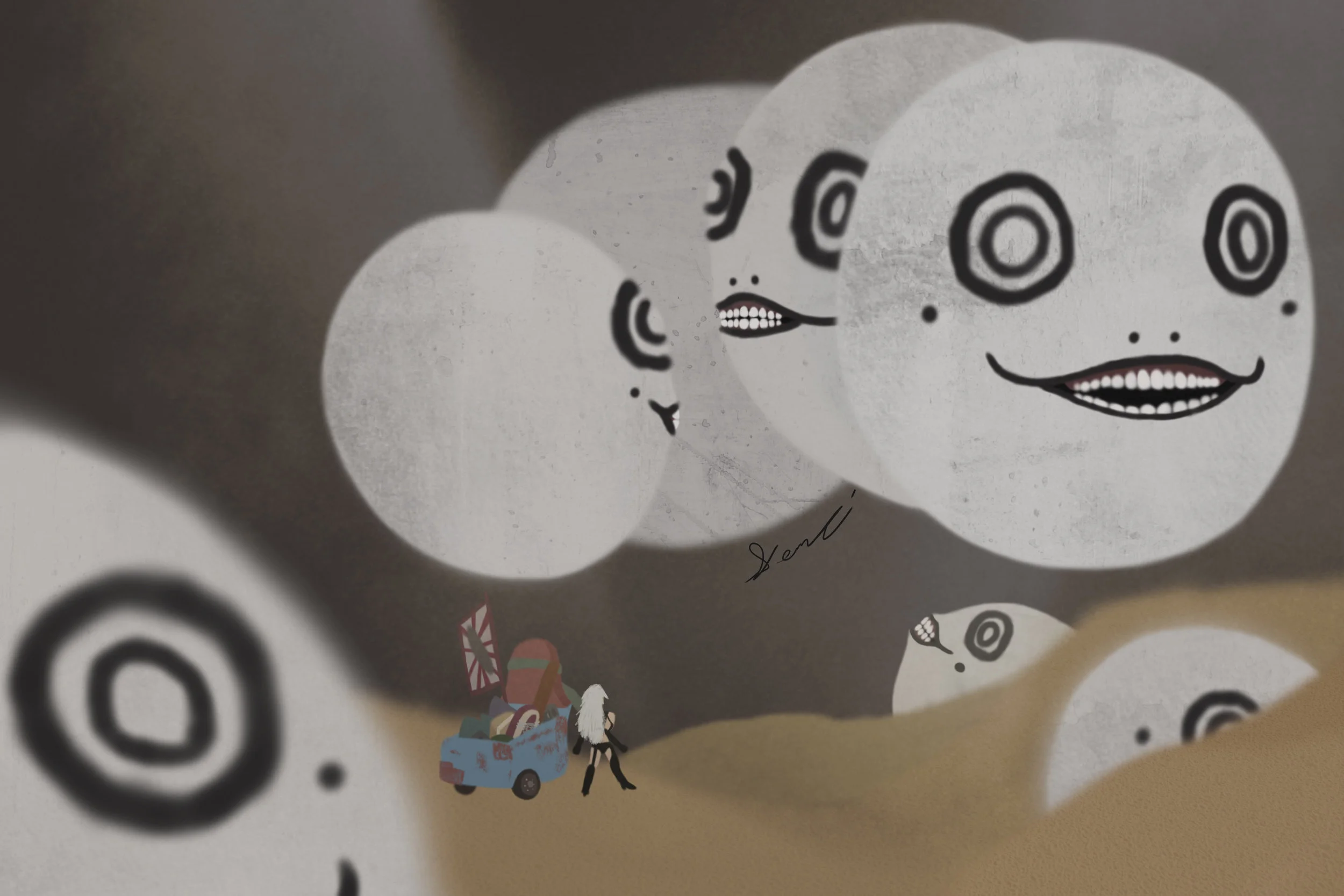
"Desert Story" by Mickaela McKinney, digital illustration

"Desert Story" by Mickaela McKinney, digital illustration

"Emil Beginnings" by Mickaela McKinney, digital ullustration

"Emil Beginnings" by Mickaela McKinney, digital ullustration

"Artorias And Manus" by Mickaela McKinney, digital illustration

"Artorias And Manus" by Mickaela McKinney, digital illustration

"Tempest Stuff 2" by Mickaela McKinney, digital illustration

"Tempest Stuff 2" by Mickaela McKinney, digital illustration


Entire contents copyright © 2018 Louisville Visual Art. All rights reserved. 

calltoartists2.jpg

Are you interested in being on Artebella? Click here to learn more.

Painting

The Academy at LVA 2018 Senior Showcase: Amy Gue

unnamed-7.jpg

Amy Gue took Developing Concepts with Miranda Hale in the Fall 2017 semester, and just finished Drawing and Painting 1 with Leslie Shell. Both Academy at LVA classes were at the Holy Trinity/Clifton Community Center.

 “I have been competing in speech and debate through the National Christian Forensics and Communications Association (NCFCA) for the past 5 years, and I have placed in multiple events. I have gotten 2nd place in duo interpretation and 3rd place in illustrated oratory to name a few. Last year, my design won NCFCA Region 6’s t-shirt design contest.”

unnamed-2.jpg

Amy has been accepted at John Brown University, Lipscomb University, Taylor University, Cedarville University, and the University of Louisville, and was awarded generous scholarships at Lipscomb, Taylor, and Cedarville. She will be attending Cedarville this fall, and is planning on majoring in graphic design.

“I have volunteered for the past 3 summers at a family camp for military families called White Sulphur Springs. That experience required me to interact with and welcome guests, clean the hotel, help serve meals, and work on a team to carry out certain tasks. It has been such a good and influential experience.”

unnamed-3.jpg


“I walked into the Developing Concepts class not appreciating conceptual or modern art, and came out with a new understanding of those art forms. I no longer scoff at that type of art, but I am now able to appreciate it. Although modern art forms are still not my favorite, I can still appreciate them. Drawing and Painting 1 taught me all the little principles, and I learned a lot of practical tips. I made some of my best work in that class. I would definitely recommend LVA classes. Ms. Miranda Hale, the teacher of Developing Concepts, really helped me learn a lot about the art program at the University of Louisville. She contacted influential professors there, and organized a private tour of the Hite Art Institute for me! I really appreciated her help, and she taught me a lot about how to build an impressive portfolio.”

Amy's work will be included in The Academy at LVA exhibition, which will be on display May 9 - 16 at Louisville Visual Art, 1538 Lytle Street in the Portland neighborhood. Gallery hours are Monday through Thursday, 12-4pm, or by appointment. There will be a reception Friday, May 11, 6-8pm.

Scroll down for more images

unnamed-4.jpg
unnamed-6.jpg
unnamed.jpg
unnamed-1.jpg

Entire contents copyright © 2018 Louisville Visual Art. All rights reserved. 

calltoartists.jpg

Are you interested in being on Artebella? Click here to learn more

Painting

Q&A: About G. Caliman Coxe (1907-1999)

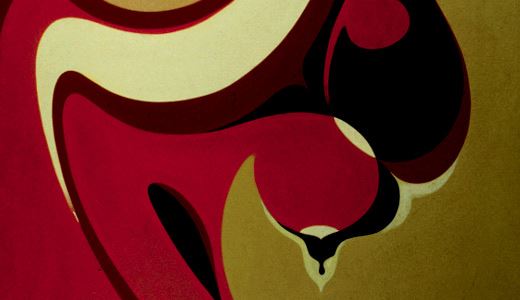
“Signals” by G. Caliman Coxe, circa 1960s. Courtesy of Filson Historical Society

“Signals” by G. Caliman Coxe, circa 1960s. Courtesy of Filson Historical Society

Understanding the Indescribable: Paintings by G. Caliman Coxe was on exhibit at the Filson Historical Society in the fall of 2017. On September 7, 2017, sculptors Ed Hamilton and William Duffy, and University of Louisville Professor Emeritus Dr. Robert Douglas appeared on LVA’s Artebella On The Radio on WXOX 97.1/Artxfm.com to talk about Coxe, who had been a big influence on them personally. Dr. Douglas is in the process of writing a book titled “An American Genius or an African Bwana Mtomo: The Life and Art of G. Caliman Coxe.”

Coxe is considered the Dean of African American artists in Louisville. He made his living as an illustrator for local theaters and, for 20 years, at the Training Support Center at the Fort Knox Army base outside Louisville. He co-founded the Louisville Art Workshop, which positioned him as a crucial mentor for a new generation of artists. 

This is an edited portion of the interview, which you can listen to in its entirety here.

Ed Hamilton, Dr. Robert Douglas, and William Duffy in the WXOX studio on September 7, 2017.

Ed Hamilton, Dr. Robert Douglas, and William Duffy in the WXOX studio on September 7, 2017.

Keith Waits: G. Caliman Coxe is called a significant Black artist in Louisville, but really he is just a significant artist period, correct?

Ed Hamilton: About being labeled as "Black" artists, I think the powers that be just didn’t know where to put us: the critics and galleries; and it was awhile before Sarah Lansdell, who was a wonderful art critic at the Courier-journal long before Diane Heilenman or Elizabeth Kramer, and back then the paper was full of art stuff, and we all would be waiting to see who had made that Sunday edition. I saw over the years the evolution of Sarah getting rid of that label. I guess somewhere along the way they decided that we were true artists! Why are we getting labeled? You don’t label Bob Lockhart “white artist”! It took awhile for them to delete that from in front of our names.

KW: How did you first meet G.C.?

Ed Hamilton: I grew up in the heart of the Black community at Sixth and Walnut streets, and we used to have two theaters down there, the Lyric and the Grand. When I was growing up “on the block”, as we used to call it, I had no knowledge of the man whatsoever, and I was always looking at the marquees and was fascinated by the images there. Fast forward to 1969 when I was graduating from the LSA, which was then the Art Center School, and preparing my exhibition, and I asked my instructor: “My show is only going to be up for a week, Where am I going? Who can look at my work? I need some guidance. Should I be looking for another profession?” He said there’s a group of artists down in the west end, at 35th and Del Park Terrace. So I immediately went down and knocked on the door and met Fred Bond, who was the originator of the Old Louisville Art Workshop, and GC was a member, and I told these cats I wanted someone to look at my work, and they got in the car and came out to the school, and when they saw what I was doing, they said, “you gotta be with us!” I said OK. You know, I thought I was the only Black artist in Louisville at the time (laughing)! I didn’t know! I was usurped by Sam Gilliam, Bob Thompson, G.C. Coxe, and Robert Carter.

So I sat at the feet of these guys listening to them espousing all this stuff about culture, art and the diaspora of the world, you know, and then one day GC said to me, “young man, you don’t remember me?”…And I said, “no?” He went on, “I seen you romping up and down 6th and Walnut Streets all the time!” - you see, he knew my parents.

William Duffy: Fred Bond came to my school to visit the art class, and I also thought I was the only Black artist in town, so he told me to go down to the Art Workshop. GC was sitting there working on a beautiful abstract piece. I introduced myself and told him Fred Bond had told me to come to the workshop, and he said, “well, young man…I’m gonna tell you..." and he reaches in his pocket and pulls out his Barlow knife and flicks it open! "I’m not the easiest person to get to know.“ 

And I thought, maybe this is someplace I don’t need to be! That was GC, he would cut up but in a quiet way, he was never really loud or boisterous, but he made his presence felt.

Detail of November '88 (Totem Pole with Little People) [Collection of Ed Hamilton]

Detail of November '88 (Totem Pole with Little People) [Collection of Ed Hamilton]

EH: He went down to Bridges & Smith and asked them if he could mix two kinds of paint, and they told him no. GC said, “Well, give me a can of both anyway,” and went home and started mixing them. He really liked the results. GC was so experimental, that’s why the other artists like Sam and Bob Carter would come around. GC was throwing stuff on the canvas, layering it, raking the paint around and things like that. Hard as a brick when it dried. His paint would dry so hard you could pound it with your fist.

Robert Douglas: I have bout 90% of his work archived as slides, and I have about nine hours of cassette tapes of interviews with GC. I place him as one of the first generation of African American professional artists (in Louisville). As an art historian I distinguish between trained and untrained, naïve and primitive. Of course, we are all naïve until someone recognizes our talent and we then get training, but GC was one of the first African Americans to receive a degree in art from the University of Louisville. At that time, he was convinced of his own ability, but he realized that he needed some credential from the mainstream establishment, so he got a degree.

GC was highly technical, a craftsman par excellence, and he was trained to be a craftsman in whatever he did, because he was raised on a farm by his father. His father had a classical education, and was an ordained Presbyterian minister, and his mother made sure that all the children had music and arts training. She taught them all how to use watercolors. So from the very beginning he had some teaching, because his mother had some training.

EH: GC also had three other brothers: Bill, John, and Gus, and they were all artists, painters, except that Bill became an architect operating out of the Washington, D.C. area, and Gus painted as a paraplegic, because he was hurt in WWII.

KW: So Dr. Bob, you put yourself in that second generation of African American artists?

RD: I found three or four other artists of G.C.’s generation: William Guest, who worked in Smoketown, and Carl Ramsey, Elijah Wilson, and there is at least one other.

KW: But of those names, it was G.C. who mentored the next generation?

RD: Yes. He was the stellar person of that group. The one who produced the greater volume of work, and the greatest diversity of work. I have identified 12 distinct periods for his work. In the exhibit at Filson, you see six examples.

KW: Talk about the imagery in his work.

EH: When you talk about his techniques, his work evolved into more sculptural forms. Meaning he would take, for instance, pegs or dowel rods and cut them into specific pieces and then inject that into the canvas with strips of cardboard. He’s got one piece where he’s literally taken wire and shaped it with his elliptical shapes painted onto the canvas and penetrated the canvas so that he paints the piece all one color but what happens? You have the flat surface painted the same color as the wire is painted but it gives you two different colors even though its painted the same color. But you can do that when you come away from the canvas…come away from the surface. It’s almost like Bas Relief.

WD: The back of the canvas was as much art as the surface. GC would take that wire and actually do a negative/positive sort of thing to make it stand out. So whatever wire was on the back, he would pierce the canvas, and whatever wire was on the front would intersect the wire on the back and thus raise that canvas.

Also what GC was doing, he couldn’t find the shape that he wanted, so he invented a little tool that he would use to bend the wire, so he would have square shapes in the wire, or a loop. It was all a process.

He was not only an artist. He was also an inventor.

KW: Did he show much outside of Louisville?

RD: Yes. Sam got him a show in DC, and he had shows around in different places. I curated a show that included his work in Rome and Sicily, so he exhibited internationally at least once.

“Gemini” by G. Caliman Coxe, circa 1970s. Courtesy of Filson Historical Society

“Gemini” by G. Caliman Coxe, circa 1970s. Courtesy of Filson Historical Society


Interview by Keith Waits. Entire contents copyright © 2018 Louisville Visual Art. All rights reserved.

calltoartists2.jpg

Are you interested in being on Artebella? Click here to learn more.