Artists are known for repurposing materials, but Lindsey Dezman’s most recent approach is a little more unusual. She captures the detritus from a communal studio sink trap, a plumbing fixture that collects discarded clay and glaze particles that would otherwise clog sewer lines. Although a new technique for her studio practice, it is consistent with the anthropological thread that seems to run through Dezman’s career.
“I explore materials and objects as a means to understand rhythms of time. As we age, so do the things around us; the steps upon our front door creak and slump more with every season, while a fossilized, thousand years old dinosaur bone is a test of time. My work is inspired from these rhythms and pulses of life. The results are simple, abstracted forms through which material explorations take place. I specifically choose to highlight the inherent life spans and the nuances within each of the materials that I use.”
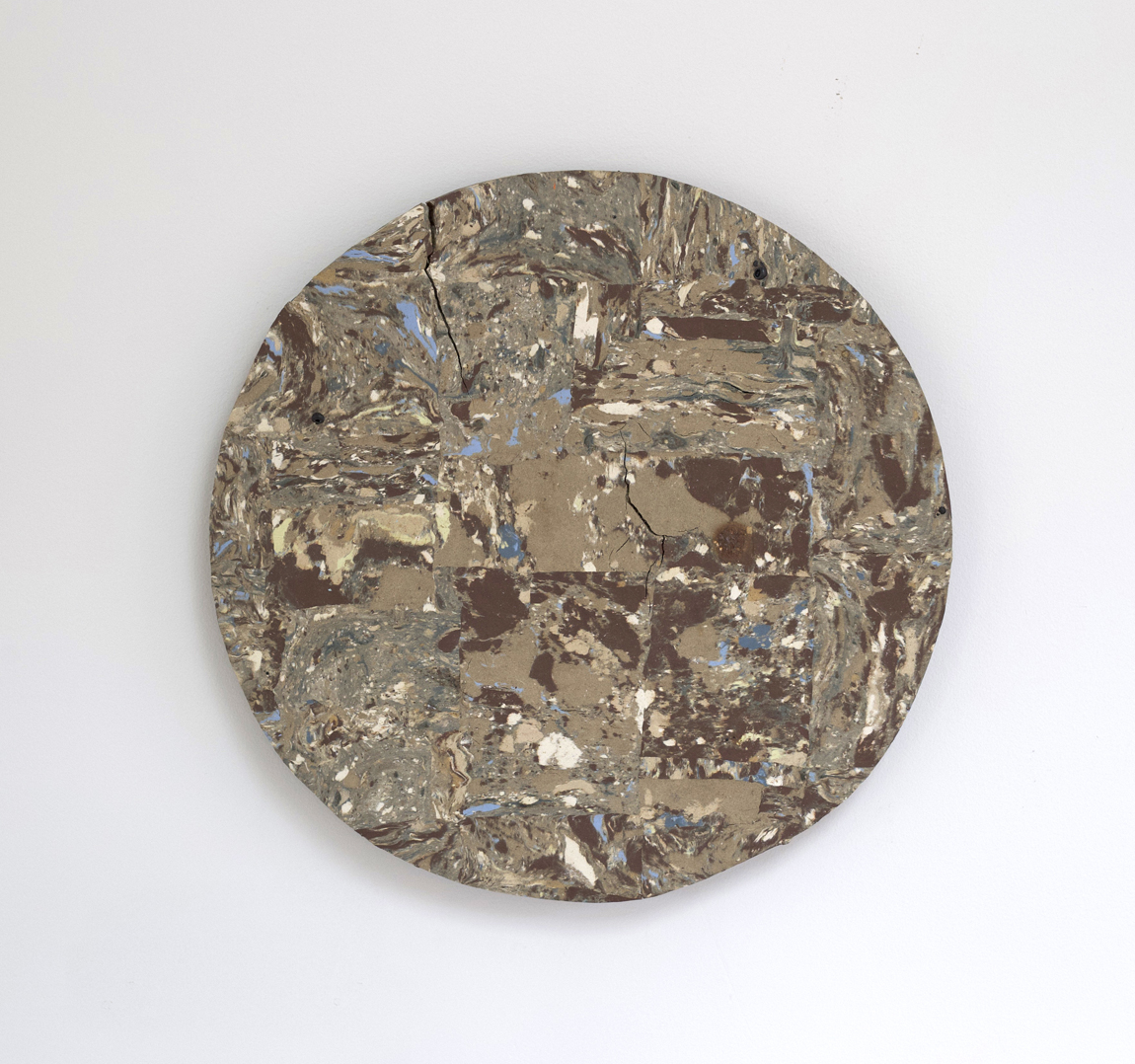
“As my methods of making vary, my focus is always upon utilizing clay in alternative ways. "Grenadier" is a collection of wall works that highlight a continued self-interest in material research, recording, and beauty in the discarded. The sludge is ever changing from red, white, beige to blue depending upon the materials used by myself, and others in the studio. I collect this accumulated sludge of clay and glaze and build the work using the Japanese process of Nerikomi. It incorporates a layering and stacking technique that, once cut into sections, reveals a decorative pattern. The wall pieces illustrate the transitional shifts between material usage over time while the sculptural works are core samples. By harvesting materials from the sink trap, the results are spontaneous and the pattern is unpredictable. The work becomes indicative of the materials washed away and becomes a record mapping the activities within a communal studio.”
Even though Dezman’s past work does include examples of what could described as more conventional forms and vessels, she seems far more conceptual than a potter. Her perspective feels fluid, shifting between an absorption in the craft and an objective point-of-view of her position in the world as both an artist and a human being.