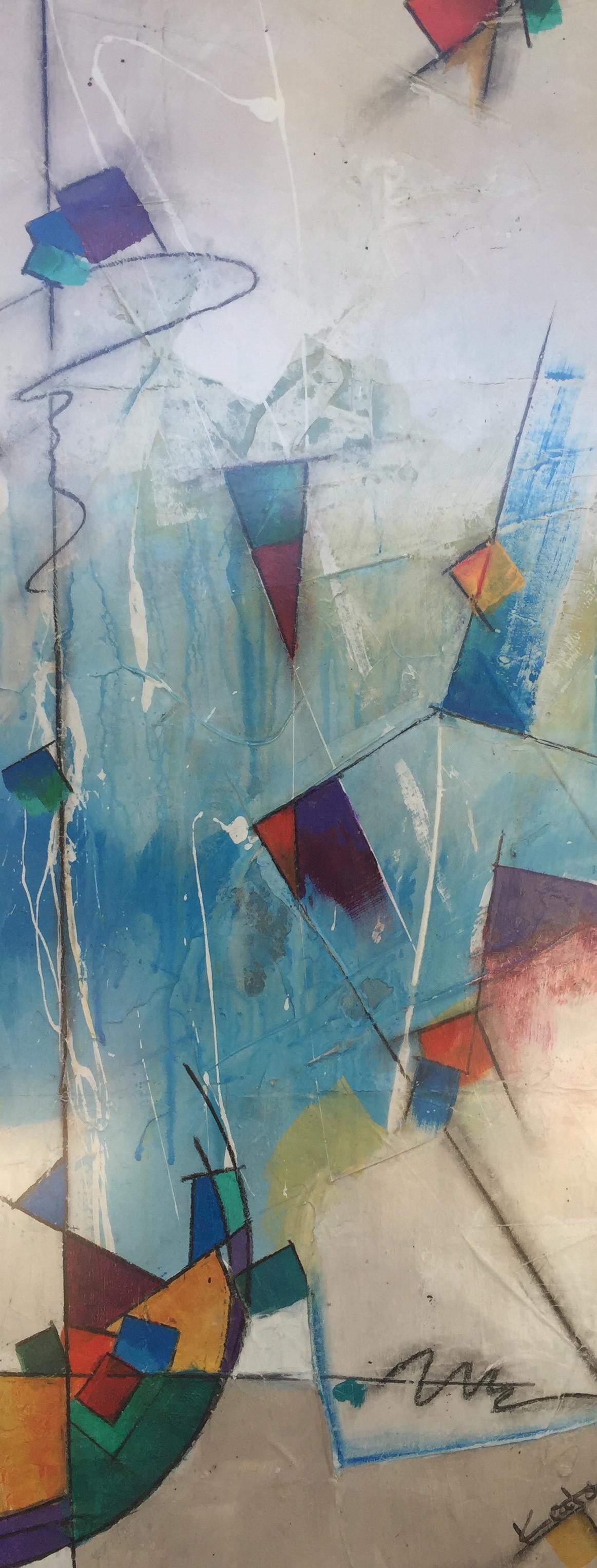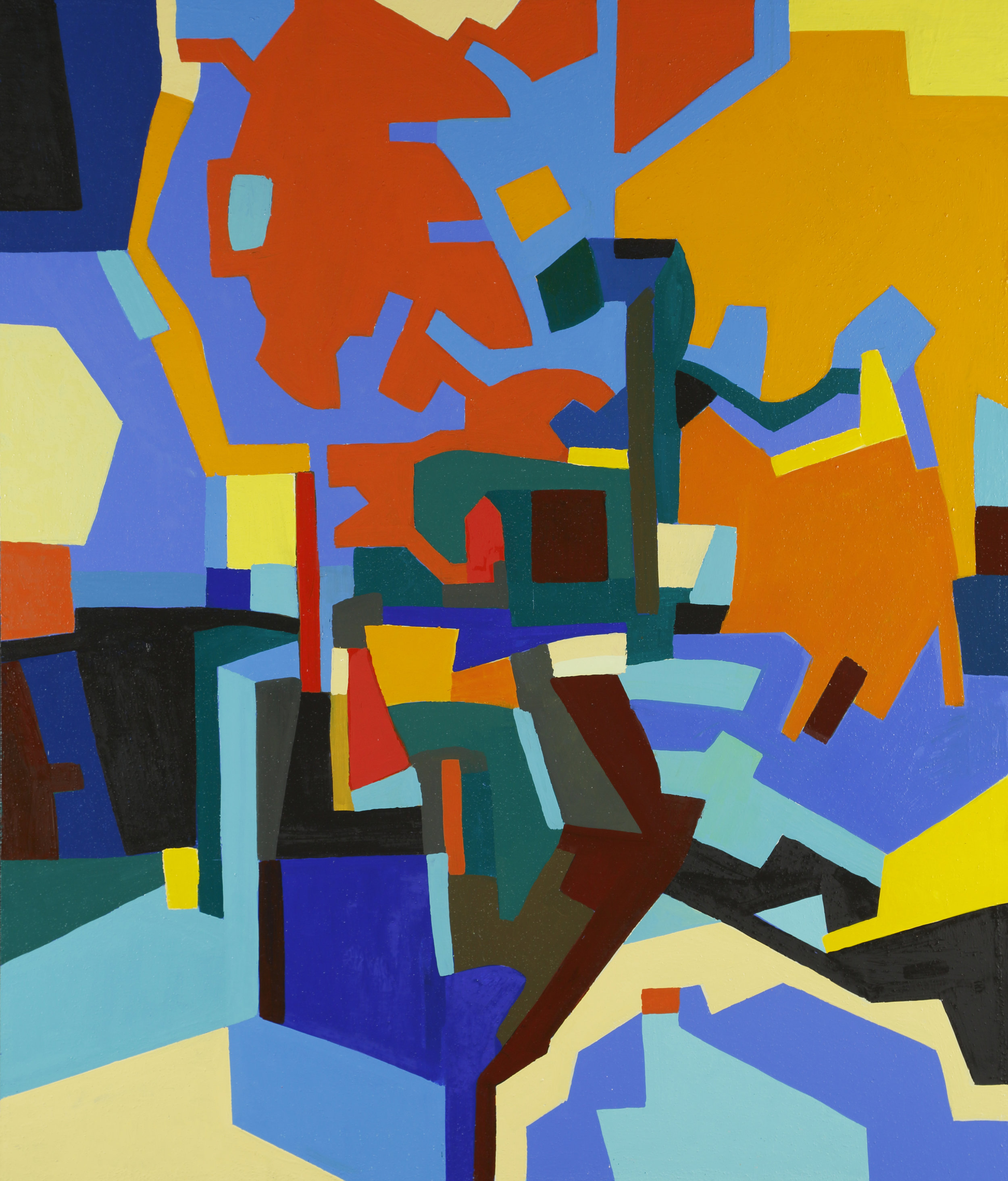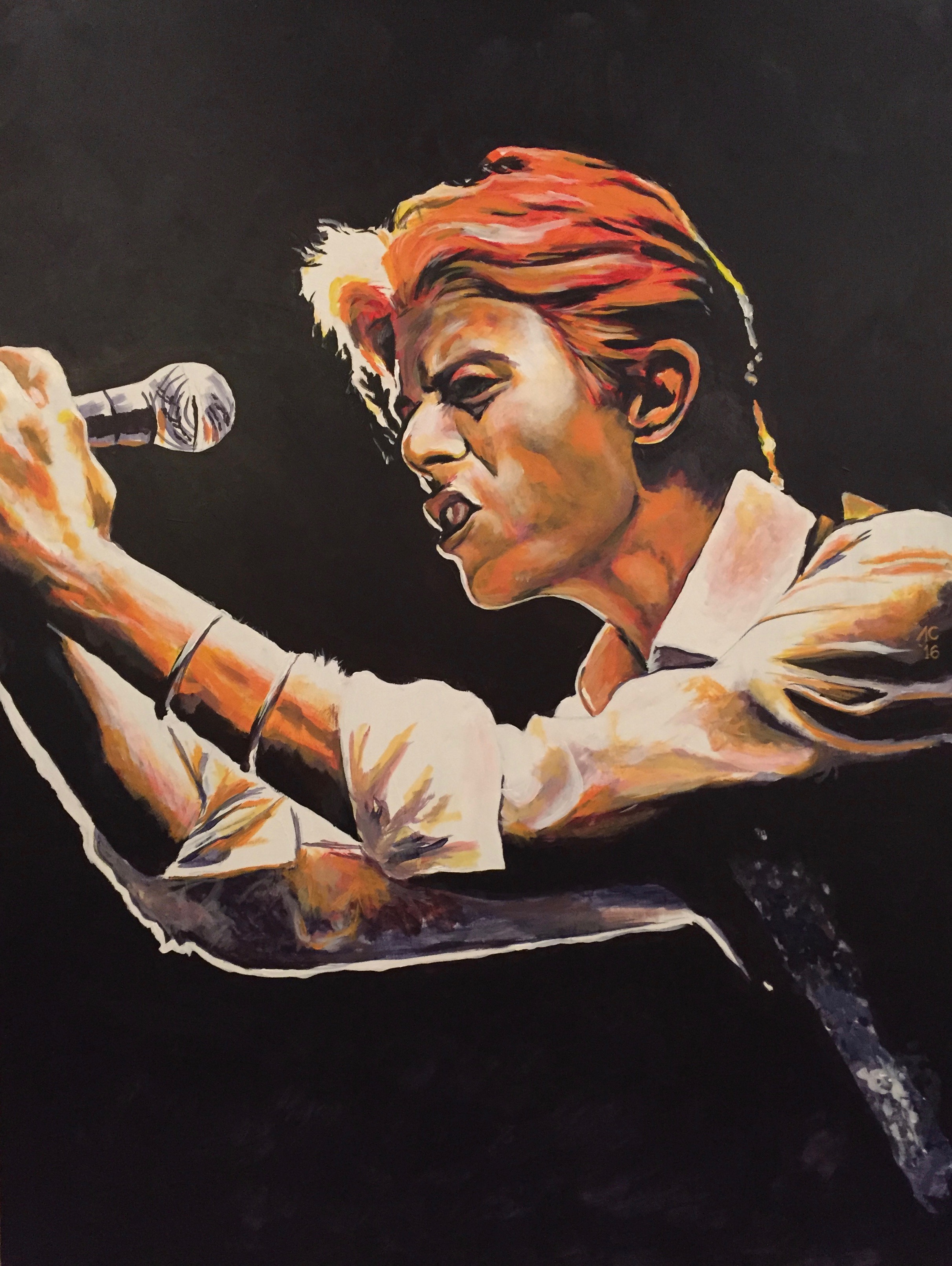
Mixed Media

Curatorial Spotlight: Ann Stewart Anderson


“I believe that I’m here to create in a world that’s falling apart.”


A photograph of Ann Stewart Anderson. Photo by Sarah Katherine Davis Photography for LVA

A photograph of Ann Stewart Anderson. Photo by Sarah Katherine Davis Photography for LVA

I’ve known Ann Stewart and her work much of my adult life. As I got to know her work, I admired it for its visual accessibility and its conceptual complexity. Her resume of accomplishments and milestones is pages long. Over the past several weeks, I’ve read what others have said about her work, what she’s said about it, and looked at images of pieces I remember, along with ones I’ve never seen. This process has only increased my admiration.

Recently, she and I had a conversation in her studio that ran the gamut from homemade paper dolls to theologian Paul Tillich’s assertion that myths express truth. 

In our conversation, Ann Stewart talked about her father, a Presbyterian minister who studied architecture in college, built a playhouse for his three little girls, and had the courage to stand up publically for civil rights in a time when most other white ministers steadfastly kept their seats; and her mother, an artist who nurtured her daughters’ creativity with easels and paints in the sunroom, building supplies outside, and the steady encouragement to imagine.

Her parents were bedtime story readers, letting the girls take turns picking the book. When it was Ann Stewart’s turn, she always picked Greek mythology, tales of valorous men in war and the women whose lives intersected their personal and public battles. 

Dolls hanging in Anderson's studio. Photo by Sarah Katherine Davis Photography for LVA.

Dolls hanging in Anderson's studio. Photo by Sarah Katherine Davis Photography for LVA.

After graduating with honors from Wellesley with a BA in art history, Ann Stewart got a job as a secretary to the Assistant Director of the Corcoran Gallery of Art in Washington, D.C. With additional odd jobs and what she saved (proudly recalled) from her $2,700 a year job, she paid her own way through graduate school, earning a degree in painting from The American University.

Although she began her career in art as a painter, early collaborations with friends like potter Sarah Frederick and fiber artist Lida Gordon offered opportunities to experiment with other media. Her first big collaboration came when the Louisville Visual Art Association chose Ann Stewart as one of five artists for its “Collaborative Effort” show. The only condition was they needed to pick an artist from outside the region to work with.

But whom would she ask? “Somebody suggested Judy Chicago,” Ann Stewart recalls. At that time, Chicago was gaining a national reputation as a feminist artist with The Dinner Party. So Ann Stewart wrote a letter and sent some of her work. Miraculously, Chicago called. 

“What do you want to do?” Chicago asked.

A close look at Anderson's studio's desk. Photo by Sarah Katherine Davis Photography for LVA

A close look at Anderson's studio's desk. Photo by Sarah Katherine Davis Photography for LVA

Ann Stewart recalls feeling unprepared. “When she was on the phone, I had to say something, so I just said ‘menopause.’”

And that was the birth of the Hot Flash Fan project, a giant multi-media collaboration that eventually included work by over 50 artists and helped bring menopause out of the shadows and away from silly euphemisms like, “the change.”

Throughout her career, Ann Stewart’s subject has been women and the sustaining rhythm of their ordinary days. Her goal has always been to see women as subjects, not as objects. “That opens the possibility for other women to identify with the women in my work. I don’t paint portraits. I make up these women and somebody will say, ‘That reminds me of so-and-so,’ or the situations will remind them of themselves. Only women can do that. I admire male artists and have been influenced by the painting of Matisse, Bonnard and Max Beckmann, but I think there’s something significant about a woman artist being able to see something and identify with other women.”

But she’s also been a thoughtful artist, one who reads widely, assesses dispassionately and, for much of her life, kept an ongoing journal about her work: a conversation of ideas, technical struggles, connected and disconnected thoughts.

"Esther" by Ann Stewart Anderson, 14x12in, paper mosaic (2016)

"Esther" by Ann Stewart Anderson, 14x12in, paper mosaic (2016)

It’s Ann Stewart’s point of view that makes her work so provocative. In one series, she creates women in conversations. “It’s the kind of thing women are criticized for,” she says, “nattering, gossiping, but it’s how people learn things. It’s how the important things of life are passed on.” 

Her point of view sometimes reveals a wicked sense of humor, too, like the Ugly Bride series, and the Reject project that she put together at a time when she wasn’t being accepted in shows. “I got depressed,” she says. “Nobody wanted my work. It was going on too long and I decided I had to do something, so I created an art project.” By following the steps to enter a juried exhibit--excruciatingly well known by most artists—she made a point of attempting acceptance in twelve shows. The project culminated in a gala at Louisville Visual Art (LVA) when their home was the Louisville Water Tower, where all her rejection letters were displayed.

“The theme was ‘lemonade from lemons.’ Everything was yellow, and I put up all my rejections on a big wall and invited everybody else to stick theirs on, too, and then I gave ribbons for the best and worst rejections.” Although it was not part of the plan, the mojo worked. After that show—she started getting accepted again.

In her artist’s statement, Ann Stewart says her work is “characterized by dynamic ambiguity.” You can see that in the planes and angles of her “broken dish” women, or in those whose faces are partially hidden—under the brim of a hat, behind a veil or sunglasses, or the old women in extravagant dress and accessories. “You have to fill in the spaces yourself,” she says.

Various works hanging in Anderson's studio. Photo by Sarah Katherine Davis Photography for LVA.

Various works hanging in Anderson's studio. Photo by Sarah Katherine Davis Photography for LVA.

One of the most satisfying experiences she’s had as an artist came with a series depicting the relationship between mother and daughter from the time the mother was pregnant until the day her daughter stood by her mother’s flower draped coffin. At the time, this work was displayed through LVA at Louisville International Airport. One day, Ann Stewart got a call from LVA telling her a woman had called, wanting to talk with her. She assumed the caller wanted to purchase her work, but as Ann Stewart recalls, “It was even better.”

“Are you the artist?” the woman asked.

When Ann Stewart said yes, the woman told her she’d never talked to an artist before but, ”’I was at the airport between planes when I saw your work. My daughter and I were having a big fight, but after I saw your work I was moved to reconcile with her.’ I tell that story to a lot of artists—it’s easy to feel guilty for ignoring social ills, but we don’t really know how our work affects people. “

"Sun Stand" by Ann Stewart Anderson, broken dish mosaic (2008) NFS

"Sun Stand" by Ann Stewart Anderson, broken dish mosaic (2008) NFS

Throughout her life, she’s been blessed with having good jobs to “support my habit,” she laughs. For her, there’s never been a question of how to balance making a living with making art. “Art has always come first. I always had a studio because making art is what I do.” Even marriage to Ron Mikulak, food writer and retired Food Editor for the Courier-Journal, has not created the tension some artists experience trying to balance home with making art. “I’ve been lucky. Ron cooks and I make art. When I’m working in the studio, he’s creating in the kitchen, where he loves to be. And when I come out of the studio, there’s a beautiful meal on the table.” 

Her work has tended to follow the chronology of her life. Today, she’s working on “old women” and, most lately, a series she calls the Teffubud Sisters

“I was working on the broken dish women, and I was getting really tired having to be in a mask breaking dishes. It was a big mess.” A friend gave Ann Stewart a book about paper mosaics. “I thought, ‘I’d like to try that,’” so she began hunting through some old art magazines she’d tried unsuccessfully to sell at a yard sale for material to use in mosaics. “I discovered I loved working with paper and scissors.”
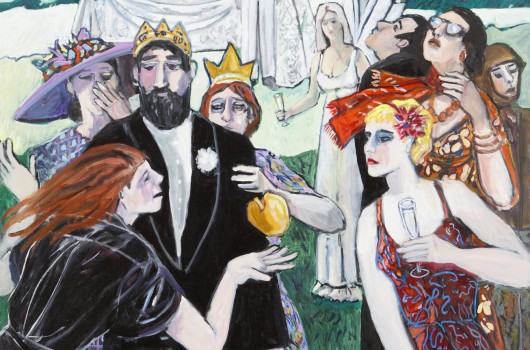
"Discord (Women and War)" by Ann Stewart Anderson, 46x40in, oil on canvas (2010)

"Discord (Women and War)" by Ann Stewart Anderson, 46x40in, oil on canvas (2010)

That change of medium was fortuitous when she and her husband moved into a condominium where she couldn’t work with oil paints any more because of the fumes, and still more so later when she was diagnosed with Parkinson’s disease. “There are some things I can’t do, but fortunately, I can still cut.”

The Teffubud Sisters were born from a picture of a grotesque man by artist Jean Dubuffet that Ann Stewart discovered in one of the art magazines. Each sister’s face takes its basic shape from the Dubuffet “parent,” but after that the ridges, lines and contours of each woman—and her adornments—belong to her alone. 

Parkinson’s has forced other accommodations. The most painful? - The fact that she can’t write any more. As she tells me this, Ann Stewart points to a long row of books and notebooks on the top shelf in her studio. “I’ve always journaled about what I’m doing—and I can’t any more. That’s really hard.”

So how does she look at her art now? “I don’t think being recognized is the most important thing anymore. I want to be like Renoir—and this story might be apocryphal—but he’s supposed to have painted on the day he died. That’s what I want to be. I want to keep creating.” 

Today, she says, that’s more important than ever. “I believe that I’m here to create in a world that’s falling apart. Creative energy is the only counter to all the destructive energy out there. That’s why it’s so important for all of us.”
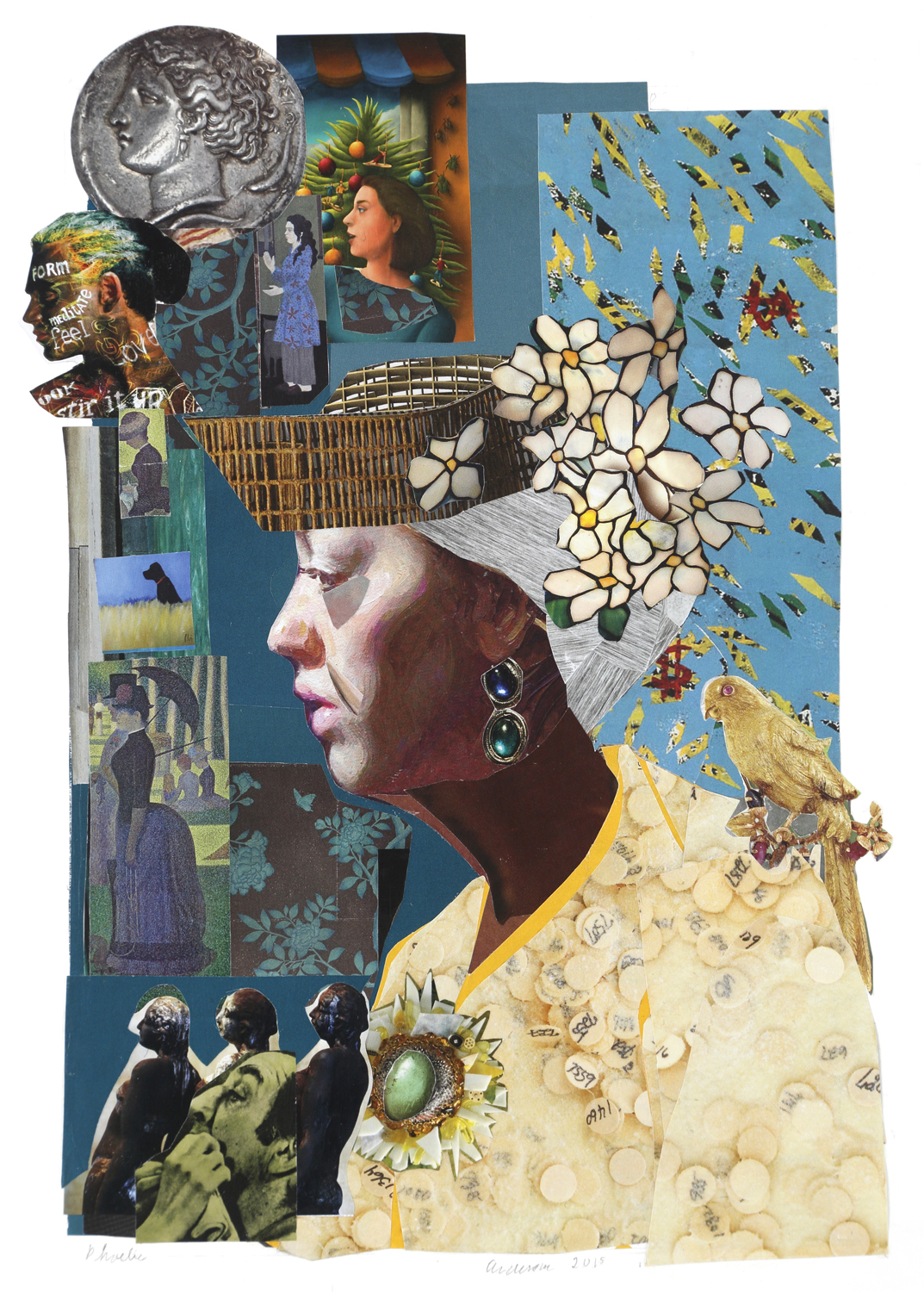
"Phoebe" by Ann Stewart Anderson, 14x12in, paper mosaic (2015)

"Phoebe" by Ann Stewart Anderson, 14x12in, paper mosaic (2015)

"Millie" by Ann Stewart Anderson, 14x12in, paper mosaic (2016)

"Millie" by Ann Stewart Anderson, 14x12in, paper mosaic (2016)


ss.jpg

This Feature article was written by Sarah Yates.
Sarah Yates is a writer who lives and works in Louisville, KY.


Are you interested in being on Artebella? Click here to learn more.

Entire contents copyright © 2016 Louisville Visual Art. All rights reserved.

Click here for further information on advertising through Artebella.

Click here for further information on advertising through Artebella.

Painting

Vignette: Tom Cannady & Robert Leo Jones

Robert Leo Jones in his studio. Photo by Sarah Katherine Davis For LVA (2016).

Robert Leo Jones in his studio. Photo by Sarah Katherine Davis For LVA (2016).

Not all artists have studios outside of their home, making participation in Open Studio Weekend a different challenge. Perhaps the best solution is when one artist invites another to join them for the weekend. Robert Leo Jones and Tom Cannady have been friends long enough that he was comfortable doing exactly that. Both are painters, but the differences in their work provide a striking contrast. Jones working mostly in abstract expressionism – I can think of no painter I have recently observed who more clearly harkens back to Pollock and the ‘drip’ technique from middle 20th century American painting, while Cannady is unabashedly representational, although his sun drenched images of Americans at leisure and the predominance of vintage automobiles connect us to the same period as Jones technique.

Tom Cannady working on a painting. Photo by Sarah Katherine Davis For LVA (2016).

Tom Cannady working on a painting. Photo by Sarah Katherine Davis For LVA (2016).

Even when working figuratively, Jones’ color palette tends to darkness, so we see none of the well-lit, carefree escapades of a flourishing middle class that we find in Cannady’s images. Even though we are only looking at their work together because of circumstance, it is a tantalizing thought that the two might be working two sides of the same street; Cannady capturing the warm nostalgia for a time that seems deceptively simpler, a period that often is held up as an ideal of American morality, while Jones probes the inevitable heart of darkness lurking beneath the surface of that rose-colored memory.

 "Jamestown 1972" by Tom Cannady, 30x30in, acrylic on canvas (2016), $1200 | BUY NOW

 "Jamestown 1972" by Tom Cannady, 30x30in, acrylic on canvas (2016), $1200 | BUY NOW

Cannady currently has pieces at the Makers Crucible Showroom in downtown Louisville, and he has a solo show opening there on December 8, 2016.

Jone's work has been featured at Huff Gallery at Spalding University, Urban Design Studio, Art [squared], and currently at Take A Seat, an exhibition at the Kentucky Artisan Center in Berea, Kentucky. Although predominately a painter, Jones also works occasionally in furniture repurpose and design. His current projects are layered paintings done in acrylic on canvas or Masonite panels. 

"Three Humans" by Robert Leo Jones, 47x61in, acrylic on masonite (2015), $1950 | BUY NOW

"Three Humans" by Robert Leo Jones, 47x61in, acrylic on masonite (2015), $1950 | BUY NOW

You can visit Tom Cannady and Robert Leo Jones in Jone’s studio in Old Louisville during OPEN STUDIO WEEKEND, November 5 & 6, 2016. The event benefits scholarship programs for Louisville Visual Art and University of Louisville’s Hite Art Institute and tickets may be purchased here.

Name: Tom Cannady
Hometown: Louisville, Kentucky
Age: 58
Education: BS in Marketing and a minor in Art, Murray State University
Website: http://www.tjcannady.com

Name: Robert Leo Jones
Hometown: Louisville, Kentucky
Age: 72
Education: BS in Marketing, Kent State University
Website: http:///www.robertleojones.com

"WHAT is going on down at the Tasty Creme?!" by Tom Cannady, 60x48in, acrylic on canvas (2016), $3600 | BUY NOW

"WHAT is going on down at the Tasty Creme?!" by Tom Cannady, 60x48in, acrylic on canvas (2016), $3600 | BUY NOW

"Banyans" by Robert Leo Jones, acrylic on canvas, 9x12in (2016), $125 | BUY NOW

"Banyans" by Robert Leo Jones, acrylic on canvas, 9x12in (2016), $125 | BUY NOW

Are you interested in being on Artebella? Click here to learn more.

Written by Keith Waits. Entire contents copyright © 2016 Louisville Visual Art. All rights reserved.

Please contact josh@louisvillevisualart.org for further information on advertising through Artebella.

Please contact josh@louisvillevisualart.org for further information on advertising through Artebella.

Painting, Ceramics

Vignette: David Keator

A photograph of David Keator taken by Geoff Carr.

A photograph of David Keator taken by Geoff Carr.

“Resurgence” by David Keator, 30x38in, oil on canvas (2014), $1000 | BUY NOW

Resurgence” by David Keator, 30x38in, oil on canvas (2014), $1000 | BUY NOW

During the first part of his life as an artist, David Keator was celebrated for unique ceramic work: traditional forms such as vessels and pots featuring details of great delicacy, but also furniture pieces. Dorothy Weil, writing in Cincinnati Magazine in June 1986 describes how Keator’s work at that time, “…brings out the elegant side of Art Deco. His tables are crafted of wood, marble, and porcelain, and have formal, classic, straight lines and pretty Deco blues and pinks. Humor and whimsy come out when Keator decides to throw in zigzag legs or create a table and vase in one.” 

Keator worked in Louisville for many years, including a stint as Professor of Ceramics at the Louisville School of Art. Later he moved to Florida and, in his last years, turned to painting when arthritis made the intricacy of his ceramics work a challenge. In a statement from 2013, Keator talked about the change in medium: “Paint became my new fascination and ‘creative outlet.’ My paintings are non-representational. They are a search for the impression or expression of objects or subjects in a spontaneously responsive manner.”

Perhaps there is more of a relationship between the work with which Keator made his reputation and the work with he makes his last artistic statements. The sophisticated surface treatments on clay give way to a more abstract but no less sophisticated development of the painted canvas surface. Curvilinear figures and jewel-like geometric shapes echo the Deco qualities Weil refers to 30 years ago. The nature of the work may have changed over time, but the character of it remains consistent to Keator’s overall aesthetic.

A silent auction of David Keator’s paintings will be held at Headliner’s Music Hall in Louisville November 6 from 4:00-6:00pm. All proceeds will go to Louisville Visual Arts and the Louisville Fund for the Arts.

David Keator
(1951-2016)

"Abrupt Turbulence" by David Keator, 15x20.5in, oil on canvas (2014), $600 | BUY NOW

"Abrupt Turbulence" by David Keator, 15x20.5in, oil on canvas (2014), $600 | BUY NOW

“Fallen Skies” by David Keator, 13x31in, oil on canvas, $950 | BUY NOW

“Fallen Skies” by David Keator, 13x31in, oil on canvas, $950 | BUY NOW

“Gathering Impulses” by David Keator, 10.5x29.5, oil on canvas (2014) $800 | BUY NOW

“Gathering Impulses” by David Keator, 10.5x29.5, oil on canvas (2014) $800 | BUY NOW

Are you interested in being on Artebella? Click here to learn more.

Written by Keith Waits. Entire contents copyright © 2016 Louisville Visual Art. All rights reserved.

Please contact josh@louisvillevisualart.org for further information on advertising through Artebella.

Please contact josh@louisvillevisualart.org for further information on advertising through Artebella.

Painting, Drawing

Vignette: Ray Kleinhelter

A photograph of Ray Kleinhelter at work on his boat (2016).

A photograph of Ray Kleinhelter at work on his boat (2016).

Ray Kleinhelter paints abstract compositions of intricate geometric pattern. Although he cites American Richard Diebenkorn and London’s Frank Auerbach as influences, Kleinhelter’s approach touches upon a variety of 20th century movements, and a viewer might feel as if they are seeing a mash-up of Color Field, Abstract Expressionism and a touch of Pop Art. But such attempts to pigeonhole his work probably wouldn’t be accepted by the artist himself: 

“I am interested in the process, (or craft) of painting, drawing, and printmaking. Every serious painter has a different interpretation of what this means. There are no rules to follow, but what we want are pictures that hold up. No explanation required. Painting in its purest form is much more interesting than any perceived meaning applied to the image. Contemporary interpretations of art, while intellectually compelling, have little to add to the language of painting, where form and content are inseparable.”

"#12" by Ray Kleinhelter, 12x9in, watercolor on Arches hot press paper (2016)

"#12" by Ray Kleinhelter, 12x9in, watercolor on Arches hot press paper (2016)

As with most artists, Kleinhelter began with representational work, and he still sees recognizable form and the natural world at the root of his intensely colored geometric abstracts: 

"Landscape Variation #4" by Ray Kleinhelter, 22.5x30in, charcoal on Stonehenge paper (2016)

"Landscape Variation #4" by Ray Kleinhelter, 22.5x30in, charcoal on Stonehenge paper (2016)

“I continue to draw and paint from nature, lately from my boat, exploring the appearance of land and light. These pictures inform others and act as starting points for improvisation. I rarely stop with one version of an image. In the last year or two, wood cut printing has become a catalyst toward flatter, more direct images. Interestingly, the paintings have changed through the experience of printmaking, moving toward what I believe is a cleaner sense of structure.”

You can visit Ray Kleinhelter on the Ohio River during OPEN STUDIO WEEKEND, November 5 & 6, 2016, where he will be painting on his boat. The event benefits scholarship programs for Louisville Visual Art and University of Louisville’s Hite Art Institute and tickets may be purchased here.

Hometown: Louisville, Kentucky
Education: Yale School of Art Summer Painting Scholar 1982; BFA, Kansas City Art Institute 1982; MFA, Indiana University, Bloomington 1986
Gallery Representation: Galerie Hertz (Louisville)

"Riverbank #6" by Ray Kleinhelter, 34x40in, oil on panel (2016)

"Riverbank #6" by Ray Kleinhelter, 34x40in, oil on panel (2016)

"Riverbank #1" by Ray Kleinhelter, oil on panel (2016)

"Riverbank #1" by Ray Kleinhelter, oil on panel (2016)

Are you interested in being on Artebella? Click here to learn more.

Written by Keith Waits. Entire contents copyright © 2016 Louisville Visual Art. All rights reserved.

Please contact josh@louisvillevisualart.org for further information on advertising through Artebella.

Please contact josh@louisvillevisualart.org for further information on advertising through Artebella.

Painting, Drawing, Mixed Media, Sculpture

Vignette: Andy Cook

"China Girl" by Andy Cook, 30x40in, acrylic on metal (2016)

"China Girl" by Andy Cook, 30x40in, acrylic on metal (2016)

Andy Cook is a native Louisvillian who produces various forms of art. He has displayed his visual artwork across the country in numerous galleries. Andy is also a published author and musician who has performed his music and poetry internationally, recording several albums. By trade, Andy is a welder with over twenty years experience. His metal work spans between homes in San Diego with Skyhook, to traditional ornamental iron work with Pohl Iron Works, to his metal sculptures and high end functional art with Reclaimed Elemental Design. Andy is currently the shop foreman for the metal department at Core Design.

"I translate my dreams, impressions and thoughts into forms of visual art, music and poetry. I knew I was a visual artist from a very early age and by the age of 15 I was able to draw anything I could see. I have continued to develop my work by examining nature, the human form, and architecture through photo-realism, impressionism and metal sculpture. In whatever medium I choose - art keeps me grounded and dreaming at the same time." – Andy Cook

"A Moment" by Andy Cook, 36x40in, mild steel (2016)

"A Moment" by Andy Cook, 36x40in, mild steel (2016)

"Red Wine & Walnut" by Andy Cook, mild steel and walnut wood coffee table (2016)

"Red Wine & Walnut" by Andy Cook, mild steel and walnut wood coffee table (2016)

After spending time in Los Angeles, Andy and his wife Kelly Cook returned to Louisville to open Cook Studio & Gallery on Frankfort Avenue. Their current exhibit, Water is Life, opened October 28 and features work by Andy Cook.

You can visit Andy Cook in Cook Studio and Gallery on the east side of Louisville during OPEN STUDIO WEEKEND, November 5 & 6, 2016. The event benefits scholarship programs for Louisville Visual Art and University of Louisville’s Hite Art Institute and tickets may be purchased here

Name: Andy Cook
Hometown: Louisville, Kentucky
Website: http://www.cookstudioandgallery.com

"Dear Ocean, I love you" by Andy Cook, 16x20in, acrylic & oil (2016)

"Dear Ocean, I love you" by Andy Cook, 16x20in, acrylic & oil (2016)

"Old Man" by Andy Cook, 8x10in, ball point pen (2016)

"Old Man" by Andy Cook, 8x10in, ball point pen (2016)

Are you interested in being on Artebella? Click here to learn more.

Written by Keith Waits. Entire contents copyright © 2016 Louisville Visual Art. All rights reserved.

Please contact josh@louisvillevisualart.org for further information on advertising through Artebella.

Please contact josh@louisvillevisualart.org for further information on advertising through Artebella.