Cartooning

Feature: New Yorker Cartoonist Henry Martin - CFAC Student From The 1930's

“I remember (quite clearly!) being four years old and knowing that I wanted to draw.”

–  Henry Martin (1)

cncartoons034856.jpg

In 1972 Jim Geraghty was the Art Editor of The New Yorker. One day each week was “look day” - a group of cartoonists would wait, in turn, outside of his office to pitch cartoons for possible publication in the magazine. They were under contract to The New Yorker, which means Geraghty had the first shot at any new ideas. Henry Martin was one of those artists, bringing about 20 fresh ideas as pencil roughs, but perhaps 10 as finished ink drawings. In a 1972 interview with Cartoonist PROfiles, Martin remembers: “When I began to do magazine cartoons, I didn’t feel competent enough in the drawing department, and I thought that if drew the cartoons up as best I could – every single one – that over the years I’d get to be a better artist.”(2) Whatever Geraghty passed on could then be offered to The Saturday Evening Post, Punch, Better Homes and Gardens, and Ladies Home Journal, but Martin was published often in The New Yorker.

Henry Martin in 1972. Photo by Jim Ruth.

Henry Martin in 1972. Photo by Jim Ruth.

Martin was born in Louisville in 1925, the year that the Art Center Association (now Louisville Visual Art) began its Children’s Fine Art Classes. In the 1930’s, young Henry was enrolled for some time in those classes before the family relocated to Dallas, where he graduated from what is now St. Mark’s School of Texas. He attended Princeton University, graduating in 1948 with a degree in Art History. Later he studied art at the American Academy of Art in Chicago.

His daughter, Ann M. Martin, is the author of the hugely popular "Baby-Sitter’s Club" books for young readers, which she published for more than 30 years. “My father was a self-employed artist who rented a little studio in Princeton, New Jersey, where he went every day for many years to create cartoons and illustrations to sell to magazines and other publications. His work ethic, along with his entrepreneurial spirit and determination to succeed in his chosen profession, made a lasting impact on me and my own career choices.” (1)

cncartoons005979.jpg


In an interview for Scholastic conducted by his daughter in 2014, Martin remembered his early days living in Princeton, New Jersey: “I supported my family by selling cartoons and illustrations to various magazines and taking on odd jobs (for example, painting a mural on the wall of a local store!). I was regularly selling small spot drawings to The New Yorker magazine, but I had a greater goal in mind, and that was to publish cartoons in The New Yorker. I'd been a dedicated reader of The New Yorker since I was a young boy, and I knew that getting published in this magazine was considered to be the pinnacle of anyone's cartooning career. 

To help achieve this goal, I challenged myself to submit twenty cartoons a week, every week, to The New Yorker. I did this without fail for four years, and every single cartoon was turned down. 

And then one day it finally happened – The New Yorker accepted one of my cartoons.” (1)

0629_retirement-martin-senior-moment_485x340.jpg


The art of the single frame cartoon is deceptive. One image and a scant few words communicating a joke with nearly universal understanding can seem so simple, but try it sometime. Martin’s style was classic, clean and uncluttered, establishing location and context with economy. The cartoons are populated by the kind of white, Everyman characters that exemplify the mid-20th century American aesthetic. Martin’s people are self-satisfied but almost never smug, filled with the confidence of freedom reinforced by a post-World War II society. The humor is dry, affectionately satirical, a tone that would eventually be replaced by the more off-kilter intellectual sensibility of cartoonists such as Gary Larson, and a shift Martin anticipated in the 1972 interview: “I really believe that there will be a wedding of the purely humorous, and the brainy, in cartoons of the future.” (2)

In 1998, Martin and his wife moved to Pennswood Village, a continuing care retirement community in Newtown, Pa. For many years he contributed cartoons to the community newsletter, making his subjects the concerns of the residents: medicines, idleness, and the rueful, bemused perspective that can seem a natural by-product of longevity.

0629_retirement-martin-pill-jars_485x340.jpg

(1) Scholastic.com, Letters from Ann, An Interview With My Father, Cartoonist Henry Martin
(2) Cartoonist PROfiles #14, June 1972, Interview with Henry Martin

Written by Keith Waits.
In addition to his work at LVA, Keith is also the Managing Editor of a website, www.Arts-Louisville.com, which covers local visual arts, theatre, and music in Louisville. Entire contents copyright © 2017 Louisville Visual Art. All rights reserved. Cartoons from The New Yorker published under license from © 2017 Conde Nast.

calltoartists7.jpg

Are you interested in being on Artebella? Click here to learn more.

Digital, Mixed Media

Vignette: Sid Webb


“These images are representative of a life long need to use art to reflect the political atmosphere.” – Sid Webb

(Honoré Daumier, after Charles Philipon, who was jailed for the original.)

(Honoré Daumier, after Charles Philipon, who was jailed for the original.)

Political satire has a long and storied history. Honoré-Victorin Daumier (1808-1879) caricatured the French King Louis Phillipe turning into a pear, and often as corrupt. In 1835, the king reinstituted censorship of images, effectively curtailing Daumier’s most pointed political work. By the time Napoleon III took the throne, Daumier had become more careful, inventing Ratapoil, a political henchman of the new king that placed his critiques at a safer remove.

Such commentary in art today is usually more explicit, owing to digital technology that makes it all too easy to incorporate actual photographs of the subject. Of course, their subjects in return attack the artists, but has any period ever provided such ripe targets as this generation’s overexposed and shameless crop of politicians?

"The Word Only He Can Say Publically" by Sid Webb, Digital multi-media, Acrylic, 24x40in, 2017, $3400

"The Word Only He Can Say Publically" by Sid Webb, Digital multi-media, Acrylic, 24x40in, 2017, $3400

Sid Webb is an artist and activist who, now a "Senior Citizen", still takes to the streets with his wife to protest injustice and inequality. As a Kentucky resident, he need not look very far to find the conflict between ideologies and division that defines our age. Senate Majority leader Mitch McConnell (R-KY) draws his ire, as does the current President of the United States, Donald Trump.

In a pointed commentary on the now infamous Access Hollywood video, Webb positions the 45th occupant of the Oval Office in conflict and contrast to a sexualized female figure that is both salacious (in its sheer, revealing lace) and innocent (the face of silent movie icon Clara Bow). The result is a bracing image of ego and arrogance run amuck that unfortunately has become an all-too common part of the Modern American Experience.

There is little need to explain Webb’s point-of-view; the images speak for themselves.  The artist has stated before that, “Art is a creation that aptly describes its time and place,” and perhaps that is the explanation necessary. The themes of corruption and the abuse of the people’s trust are here rendered in terms specific to today, but they are universal, the same as expressed by Daumier and others over time, and just as likely to keep being revisited over and over, for the next generation of artists to rail against.

Webb works in a variety of mediums, and included here are figure studies that verge into the abstract. "Green Woman" merges the generous figure of an ancient fertility goddess with a Pop Art sensibility, capturing a Post Modern Feminism in loose gestural fashion and a note of sardonic humor.


Hometown: Lexington, Kentucky
Education: Majored in journalism and political science, University of Kentucky; Atlanta School of Art (High Museum)
Website: www.sidwebb.com


Scroll down for more images


"'Nuff Hope" by Sid Webb, Digital, 6.25x10in, 2013, $180

"'Nuff Hope" by Sid Webb, Digital, 6.25x10in, 2013, $180

"Boys" by Sid Webb, Ink & conte crayon, digital restoration, 16x20in, 1967, $2200

"Boys" by Sid Webb, Ink & conte crayon, digital restoration, 16x20in, 1967, $2200

"Green Woman" by Sid Webb, Acrylic, 8x8in, 2017, $180

"Green Woman" by Sid Webb, Acrylic, 8x8in, 2017, $180


Written by Keith Waits. Entire text copyright © 2017 Louisville Visual Art. All rights reserved.
Original works of art, copyright reserved by artist.

calltoartists2.jpg

Are you interested in being on Artebella? Click here to learn more.

Graphic Design, Animation

Student Spotlight: Sierra DeMers


“Reality and fantasy are often funny, critical, and emotional places to reside in…” Sierra DeMers

"Pencil vs. Dorm" by Sierra DeMers, Mixed media, 8x12in, 2016, $15

"Pencil vs. Dorm" by Sierra DeMers, Mixed media, 8x12in, 2016, $15

While it can be said that any art gives us insight into how an artist sees, Sierra Demers illustrates how an artist might look at the world in clever images that combine the imagination and “reality”.

“I am a daydreamer,” says DeMers. “I will frequently take a look at the real world I’m living in and play out some wacky, impossible scenario in my head. While this might seem like I’m ignoring reality, I feel more like I’m embracing it. I like to explore this duality in my work, peering into one of these states of mind through the other. Reality and fantasy are often funny, critical, and emotional places to reside in, and I like focusing on the connections between them.”

Reality vs. illusion has always been a fertile theme for creativity, allowing us to question our assumptions about…well, anything, really, including our own sense of identity. But while DeMers is on well-trod ground, she occupies it with her highly individual point-of-view, which never takes it's self too seriously. All of her work, especially her animation, has a sure understanding of fun.

“One of the key elements through which I channel these musings is movement. When I create any work, regardless of medium, subject, or dimension, in my mind it is always in motion. This is what draws me so much to animation, that I can convey my crazy notions exactly as I see them, moving and life-like, without having the limitations that life brings to it.”

SelfPortrait_SierraDeMers.jpg


Hometown: Frankfort, Kentucky
Education: BFA candidate, Bellarmine University, May 2018
Website: sierrademers.wixsite.com/portfolio
Instagram: sierrakay_light/


Scroll down for more images


"Migration" by Sierra DeMers, Graphite and Ink, 14x17in, 2016, $25

"Migration" by Sierra DeMers, Graphite and Ink, 14x17in, 2016, $25

"Pencil vs. Laika" by Sierra DeMers, Mixed media, 8x12in, 2016, $15

"Pencil vs. Laika" by Sierra DeMers, Mixed media, 8x12in, 2016, $15

Click here to watch "Leonardo" animation

Click here to watch "Leonardo" animation


Written by Keith Waits. Entire contents copyright © 2017 Louisville Visual Art. All rights reserved

calltoartists.jpg

Are you interested in being on Artebella? Click here to learn more.

Painting

Vignette: Ray Kleinhelter

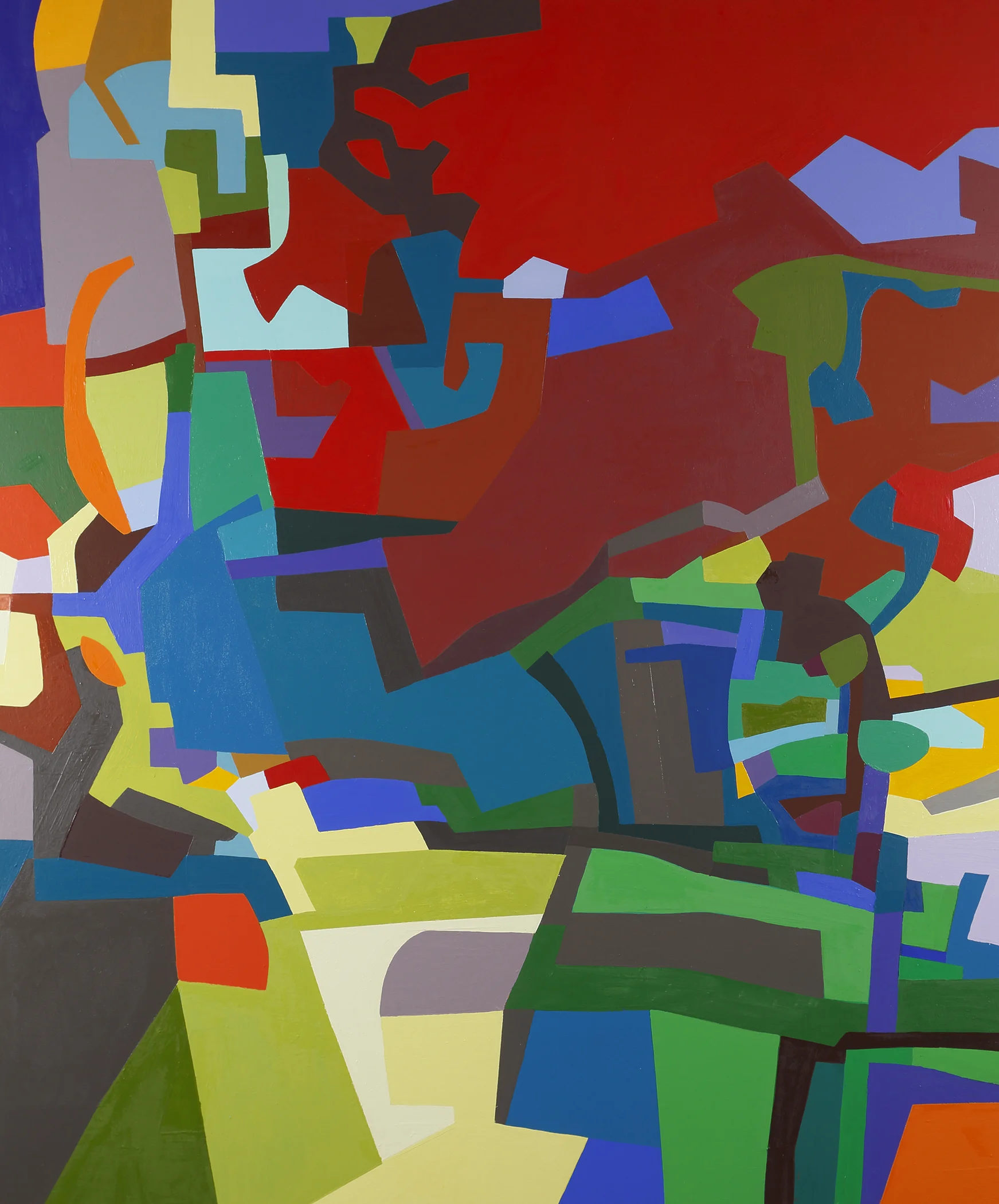
"Big Maple" by Ray Kleinhelter, Oil on canvas, 60x72in, 2017, $9000.

"Big Maple" by Ray Kleinhelter, Oil on canvas, 60x72in, 2017, $9000.

Sailing up and down the Ohio River in his aptly named boat Watercolor, Ray Kleinhelter works in the open air, sketching and painting amidst the natural beauty of the Ohio River Valley. Citing 20th century artists Richard Diebenkorn and Frank Auerbach as influences, Kleinhelter’s paintings seem to be in direct lineage with theirs; creating works concerned with the materiality of paint, viewing the medium almost as a sculptural tool and vehicle for expression, rather than a simple means for literal representation.

Though one may at first view one of Kleinhelter’s riverscapes, such as “Big Maple,” as a loose interpretation of a natural scene, “loose,” may not aptly describe Kleinhelter’s compositional sensibility. Each color-shape has the sense that it has fought for space in the composition. Carving each other out through an intricately woven series of beginnings and endings, the canvas becomes a geometric battleground. These interpretations in oil, created using multiple sketches done in the open air as reference points, “recreate the sensation of light and color out on the water, bringing the life of the river indoors,” as Kleinhelter puts it.

In “River Drawings” and “Untitled Watercolors,” the viewer is afforded glimpses into the process of creating the larger compositions in oil. Through these smaller studies, done in ink and watercolor, the “bones” of the larger, more complex pieces can be seen; the planes of light striking trees along a riverbank, the formal interaction between the land and sky that creates a horizon, and how that interaction can be manipulated to make a horizon dissolve inside the composition, refuting traditional western notions of perspective.

"River Drawing 70" by Ray Kleinhelter, Ink on paper, 9.5x12in, 2017, $200.

"River Drawing 70" by Ray Kleinhelter, Ink on paper, 9.5x12in, 2017, $200.

"Untitled Watercolor 49" by Ray Kleinhelter, Watercolor on paper, 9.5x12in, 2017, $400.

"Untitled Watercolor 49" by Ray Kleinhelter, Watercolor on paper, 9.5x12in, 2017, $400.

While the influences of Diebenkorn and Auerbach can clearly be seen in Klienhelter’s work, the well-known paintings of Piet Mondrian also come to mind. Similarly reinterpreting the natural into abstracted geometric compositions, Mondrian simplified the cityscape into a series of rectilinear forms in primary colors. The clean lines and separation of color ideas exemplifies Mondrian’s experience inside urban spaces, and so too do the energized compositions of Kleinhelter exemplify the experience of a natural space vital to the culture of Louisville.

Now through January 2018 Kleinhelter is showing new work at Lenihan Sotheby’s International Realty at 3803 Brownsboro Road in Louisville.

Hometown: Louisville, Kentucky
Education: Yale School of Art Summer Painting Scholar 1982; BFA, Kansas City Art Institute 1982; MFA, Indiana University, Bloomington 1986
Gallery Representation: Galerie Hertz (Louisville)
Website:www.raykleinhelter.com

"Big Sycamore" by Ray Kleinhelter, Oil on canvas, 60x72in, 2017, $9000.

"Big Sycamore" by Ray Kleinhelter, Oil on canvas, 60x72in, 2017, $9000.

"Late Spring Flood #3" by Ray Kleinhelter, Oil on panel, 36x42in, 2017, $3600.

"Late Spring Flood #3" by Ray Kleinhelter, Oil on panel, 36x42in, 2017, $3600.


Written by Aaron Storm. Entire contents copyright © 2017 Louisville Visual Art. All rights reserved.

calltoartists7.jpg

Are you interested in being on Artebella? Click here to learn more.

Drawing

Student Spotlight: Annalise Fegan

"Adikia" by Annalise Fegan, pencil, digital, 8.5x11in, 2017, NFS

"Adikia" by Annalise Fegan, pencil, digital, 8.5x11in, 2017, NFS


God created man (human) kind in His own image - that’s Christian belief. Whatever else you believe, it is difficult to argue that the Greeks invented gods in humankind’s image; a parade of richly drawn characters that reflect the nobility and indignity of humanity. The best of us and the worst us, for the gods were just as capable of petty jealousy and recrimination as their human creators, and it could be argued that the Greeks were explaining away their own frailty by imaging that even a deity might have feet of clay.

Annalise Fegan is a fine art student in the midst of creating a series of drawings that do the same thing for contemporary American society:

“This particular body of work combines my drawing style with my interest in mythology, as well as bringing in a critique of the modern world. These drawings are part of a series where I reimagined the Classic Greek pantheon, replacing figures like Zeus and Aphrodite with lesser mythological figures, such as Adikia, the goddess of injustice, and Phthonos, who represents jealousy. The purpose of this work was to create a pantheon of deities that represent what is really ‘worshipped’ in America. There is Plutus, god of wealth, Aergia, goddess of laziness, Eris, goddess of discord, among others. These figures are less well known, though clues to their characters have been incorporated into their design. Color was also chosen based on association with respective traits.”

"Phthonos" by Annalise Fegan, pencil, digital, 8.5x11in, 2017, NFS

"Phthonos" by Annalise Fegan, pencil, digital, 8.5x11in, 2017, NFS


Fegan is inspired by illustrations from children’s literature. “I was particularly fascinated with myths and fairy tales. One of my favorite painters is John William Waterhouse, an English Romantic painter, because his work features mythological figures. Several children’s book illustrators, including Jan Brett, Maurice Sendak, and Doris Burn have influenced my drawing style.”

The mix of English Romanticism and Classical Mythology that Fegan mines from Waterhouse is a curious but potentially intoxicating aesthetic with which to frame social commentary in the 21st century. It is unique for this moment, to say the least, so perhaps Fegan has already passed the first crucial hurdle in maturing as an artist.


Hometown: Stanford, Kentucky
Education: 2014 – current, BFA candidate, Drawing and Painting with a concentration in Illustration, Kentucky College of Art + Design at Spalding University, Louisville KY


Scroll down for more images

"Aergia" by Annalise Fegan, pencil, digital, 8.5x11in, 2017, NFS

"Aergia" by Annalise Fegan, pencil, digital, 8.5x11in, 2017, NFS

"Aergia" by Annalise Fegan, pencil, digital, 8.5x11in, 2017, NFS

"Aergia" by Annalise Fegan, pencil, digital, 8.5x11in, 2017, NFS

"Plutus" by Annalise Fegan, pencil, digital, 8.5x11in, 2017, NFS

"Plutus" by Annalise Fegan, pencil, digital, 8.5x11in, 2017, NFS


Written by Keith Waits. Entire contents copyright © 2017 Louisville Visual Art. All rights reserved.

calltoartists7.jpg

Are you interested in being on Artebella? Click here to learn more.