Painting, Mixed Media

Feature: Keeping It Weird For The Holidays

Revelry Gallery located at 742 E Market Street, Louisville, KY 40202

Revelry Gallery located at 742 E Market Street, Louisville, KY 40202

“Buy Local” has become a rallying cry in American communities in the last several years, and with good reason. As outlined by the Louisville Independent Business Alliance (LIBA), the impact on local economy is obvious, but that impact extends to environmental and philanthropic ideals that are equally important. Businesses that market the work of local artists may not be the first local business that comes to mind, but Revelry Boutique Gallery exemplifies the points in the LIBA checklist. All of its products are Kentucky-made, its gallery space has become a spotlight location for local artists, and the owner, Mo McKnight Howe, has emerged as a community leader who works tirelessly in support of cultural non-profits (full disclosure: Ms. Howe serves on the board of Louisville Visual Art). As the intense holiday shopping season is now upon us, it is important to take note of the range of local creations available. Three Revelry artists provide examples of the range of unique gifts available.

"Scenes Of The Seasons" by Kevin Oechsli, Mini Paintings, Acrylic on Wood (2016), $30 Each

"Scenes Of The Seasons" by Kevin Oechsli, Mini Paintings, Acrylic on Wood (2016), $30 Each

Kevin Oechsli

For a holiday founded on the most sacred of events in Christianity, Christmas has become surprisingly characterized by lightness and humor. The debate that the holiday has become overwhelmed by materialism has continued for decades and will likely continue for decades more, but some that feeling is founded, appropriately, in the innocence of children. The good will and jolly tone of the iconic Santa Claus figure never fails to find welcome at this time of the year, and Santa always seems to have good sense of humor about himself. Artist Kevin Oechsli’ s perennial series “Scenes of the Season” takes full advantage of this quality by placing an uncharacteristically athletic St. Nick swimming underwater, surfing a high wave, or airborne on a snowboard. It should not come as any surprise that the generous and beneficent figure should enjoy himself to the fullest, but that he is never seen except in his traditional red and white costume just might.

Hometown: Louisville, Kentucky
Age: 55

"Three Wise Men (Scenes Of The Seasons)" by Kevin Oechsli, Mini Painting, Acrylic on Wood (2016), $30 | BUY NOW

"Three Wise Men (Scenes Of The Seasons)" by Kevin Oechsli, Mini Painting, Acrylic on Wood (2016), $30 | BUY NOW

"Santa, Sled, and Reindeer (Scenes Of The Seasons)" by Kevin Oechsli, Mini Painting, Acrylic on Wood (2016), $30 | BUY NOW

"Santa, Sled, and Reindeer (Scenes Of The Seasons)" by Kevin Oechsli, Mini Painting, Acrylic on Wood (2016), $30 | BUY NOW

Various Works by Wood & Twine, wood, string (2016)

Various Works by Wood & Twine, wood, string (2016)

Wood & Twine

An emphasis on “local” artists and craftspeople might not require motifs unique to Louisville, but perhaps it is inevitable that at the intersection of creativity and commerce we find community pride. Melody Niemann and Jessica England, who together form the team Wood & Twine, make no bones about their love for their hometown: “We feel that it is important to represent Louisville and its distinct culture in our artwork. This can be seen in pieces such as Kentucky, Louisville Skyline and Fleur de Lis. Our participation in the Louisville art scene, such as the Flea off Market, Deck the Walls, Cuteopia!, and local charity events, exemplifies the importance we place on giving back to the city that raised us.”

The simple appeal is not dissimilar to folk art, one of the virtues of which is the ability to connect on straightforward level with a wide audience. “Our artwork takes a very unique approach to utilizing raw materials. Using wood, nails and twine, we are able to create distinct pieces with an unprocessed and rustic, yet simple feel. Our work is very accessible to all, available in a variety of sizes and designs. And no two pieces are exactly the same, making each a one-of-a-kind staple for the home.”

Name: Melody Niemann and Jessica England (Wood & Twine)
Hometown: Louisville, Kentucky
Age: 23 and 25
Education: BA in Marketing, with Minors in Communications and Management, University of Louisville (both)
Website: https://www.instagram.com/woodntwine/

“Louisville Skyline” by Wood & Twine, 16x12in, wood, string (2016), $75 | BUY NOW

“Louisville Skyline” by Wood & Twine, 16x12in, wood, string (2016), $75 | BUY NOW

“But First, Bourbon” by Wood & Twine, 6x8in, wood, string (2016), $35 | BUY NOW

“But First, Bourbon” by Wood & Twine, 6x8in, wood, string (2016), $35 | BUY NOW

“My Old Kentucky Home” by Wood & Twine, 8x6in, wood, string (2016), $35 | BUY NOW

“My Old Kentucky Home” by Wood & Twine, 8x6in, wood, string (2016), $35 | BUY NOW

"Inspiration Bracelets" by Gretchen Leachman

"Inspiration Bracelets" by Gretchen Leachman

Gretchen Leachman

Gretchen Leachman works in a variety of mediums, but the majority of her time is spent in jewelry design, mainly working with metal, wire, and gemstones. Some of the pieces are plaintive and understated, such as the necklace charms we see here, but others are more intricate and luxurious in their impact. “I pay close attention to creating pieces that will have meaning for the person wearing it,” explains Leachman.

She is currently involved in several pen & ink projects as well. “One of my current favorites involves collecting a series of words from family members about their home and family life … then using those words to depict a drawing of their house. Thoughts & feelings are the heart of what makes each home unique and loved, and I want to capture that as a reminder to those living there.”

“I love art. I always have. I fully support the theory that art should be fun and inspirational, and that is what I want to bring out in everything I do. It is my goal to make a connection with each individual, providing a small reminder of inner strength, joy and empowerment. Everyone has greatness and worth. Sometimes we just need a tangible reminder that we are, indeed, enough.”

Hometown: Louisville, Kentucky
Education: SHA 1990; BA, Advertising, Western Kentucky University 1994
Website: http://www.GretchenLeachmanDesigns.com

"Symbols Of Peace Made With Vintage Safety Pins" by Gretchen Leachman

"Symbols Of Peace Made With Vintage Safety Pins" by Gretchen Leachman

"Hammered & Stamped Necklaces" by Gretchen Leachman

"Hammered & Stamped Necklaces" by Gretchen Leachman

Other artists to be found at Revelry include painters Bob Lockhart, Julio Cesar, Melissa Crase, Ewa Perz, Joshua Jenkins, Erik Orr, and Gibbs Rounsavall, jewelry makers Rachael Erickson and Lindsay Hack, and household crafts by Ashleigh Anthony, DayNa Gliebe, Paul Nelson and Mark McGee, just to name a few.

Mo McKnight Howe, Molly Huffman and Major Hanging Out At Revelry Gallery.

Mo McKnight Howe, Molly Huffman and Major Hanging Out At Revelry Gallery.

In Louisville, the Buy Local catchphrase is “Keeping Louisville Weird,” which captures the unique tone of the River City’s celebration of the individualism of locally owned businesses. Flair and eccentricity are part and parcel of the experience, in which the idiosyncratic personalities of the owners are a crucial part of the identity of the enterprise. When you visit Revelry this holiday season, you also will meet Mo, Molly, and Major (the official greeter), and that personal connection to the community they represent gives added value to the shopping experience and deeper meaning to the act of giving.


This Feature article was written by Keith Waits.
In addition to his work at the LVA, Keith is also the Managing Editor of a website, www.Arts-Louisville.com, which covers local visual arts, theatre, and music in Louisville.


Are you interested in being on Artebella? Click here to learn more.

For information on how you can advertise through Artebella click here.

For information on how you can advertise through Artebella click here.

Q&A: Sid Webb


“Art is a creation that aptly describes its time and place.”
— Sid Webb


"Untitled #1" by Sid Webb, 6x18in, ash and honeysuckle (2016), $350 | BUY NOW

"Untitled #1" by Sid Webb, 6x18in, ash and honeysuckle (2016), $350 | BUY NOW

Sid Webb is a Lexington native who studied journalism at the University of Kentucky and attended the Atlanta School of Art. He came back to Kentucky to be the first art director at the Kentucky Educational Television network (KET), where he was an early advocate of using the digital canvas to create art and to make gicleé prints. He created a 13-part show for public television called Sid Webb’s Digital Studio, in which he demonstrated several ways to create art and paintings on a computer. After many years at KET, Webb turned to travel and editorial photography.

When did you first think you would be an artist?

I was convinced at a very early age that I would be an artist…maybe 10 or 12 years old.  I had done some freelance work for the new IBM plant in high school and local TV stations plus some other work in high school. Sometimes clinging adamantly to such an idea can lead one astray, as it did me. I joined the Air Force after my freshman year in college. At that time the military was very sensitive to the criticism that they were assigning recruits to the wrong jobs and they had developed an elaborate test to discover one’s potential military vocation. I insisted that I wanted to be a graphic artist and passed the test with a near 100 percent score. No portfolio was required. Just several hours of reading questions and guessing at answers to questions like “Which Speedball pin tip would you use to letter a diploma?” Even though I had passed the test, there were few graphic artists needed in the Air Force. No openings were available. There were plenty of openings for cooks and cops, however, and those occupations were in the same category as graphic artists for some reason. I opted for cop.

"Urn" by Sid Webb, about 11in tall, cherry wood (2016), $1200 | BUY NOW

"Urn" by Sid Webb, about 11in tall, cherry wood (2016), $1200 | BUY NOW

If you could do anything else but make art, what would it be?

Fortunately, during my career I found several creativity roles that were very fulfilling. After college and art school, I came back to Kentucky to work for KET just as it was going on the air. During those early years I did set designs and construction, make-up, newsletters, ads, photography…you name it. Later, I became director of production, and then created and headed a department that sold and distributed KET programs to stations in other states. Surprisingly, that time was perhaps the most fun and productive. We were distributing GED and adult literacy programs and I tried to break new ground in reaching those who could benefit from KET’s creations. I had workbooks translated to Spanish and programs subtitled. I looked for ways to make the content work on computers and audiotapes. I looked for ways to help adult education centers.  Perhaps most importantly, I explored ways to get the message of “help” to those who needed it. In the process I met some very talented and wonderful people and felt gratified. 

You were an early practitioner of digital art and the use of computers for reproductions. What do see as the future of digital art?

I had one of those "ah-ha" moments sometime ago. I was thinking about the artwork and photography I have done over the last few years.

Early on, I became enamored with the possibilities for digital printmaking and the computer as an art-making tool. I also knew that inkjet prints would face stiff opposition from galleries and buyers. I thought the process needed to be elevated and legitimized, so I invented a new term for it: "digitography".

I pat myself on the back for seeing the need, and kick myself for not being outrageously inventive.

For my intended purpose, any word that too easily revealed its derivation like digitography did was destined for the scrape heap, where it soon found itself. The word that emerged and quickly claimed proper respect among the art community was "gicleé". It was a flash of brilliance.

"Untitled #2" by Sid Webb, about 11in tall, spalted maple and catalpa (2016), $800 | BUY NOW

"Untitled #2" by Sid Webb, about 11in tall, spalted maple and catalpa (2016), $800 | BUY NOW

It didn't matter that the true definition could be easily discovered, which is "to spit," or "to sputter". What mattered was that it had a nice ring to it.  The beauty of the choice was that it is a French word, always nice sounding; and it helped that France was the birthplace of modern, avant-garde art. Also, it helped that the definition of gicleé, even when discovered, did not immediately reveal its connection to the mechanical and digital aspects of computers.

That leads me to the "ah-ha" about what I have been doing.

I have been doggedly creating "paintings" on the computer that looked as though they were created with traditional media. Again, I wanted to legitimize the computer as an art tool, and I have been trying to do it by demonstrating that my approach worked as well as other tools by inviting comparisons.

The epiphany was the realization that every new medium first gained legitimacy in this way. For instance, early films and radio productions "translated" books and theater before it found firm artistic footing of its own.

Even though I am someone who adopted the computer early on as an art tool, others have moved beyond "translations".  I decided I would, too.

What advice would you give a young artist just out of college?

The challenge is how to pay off the student loan, pay the rent, and have enough money left over to create art the way you want to do it. Facing this reality is often shocking and overwhelming . . . and defeating. I have a lawyer friend who told me that in law school he learned the law but left school with no idea how to practice it or run a business. That’s so very true of young artists just finishing their degrees. How to sell art is the very first thing a graduate needs to learn. I suggest an internship with a successful artist or photographer. Working in a craft shop or gallery is also a great option. 

Tell us about an important moment of transition for you as an artist?

Retiring from my day job freed me to explore the world around me . . . libraries, museums, friends, travel. I was usually free to spend as much as I wished on my art projects. I had no deadlines, self imposed or otherwise as a rule.

"Untitled #3" by Sid Webb, about 16in tall, wood (2016), $180 | BUY NOW

"Untitled #3" by Sid Webb, about 16in tall, wood (2016), $180 | BUY NOW

What's your favorite place to visit?

Tough question. I love France because I have an insatiable appetite for great food, and it is hard to find mediocre or bad food in France. France, like so many other places I have visited, is candy to the eye and fresh air to the inner spirit. I am able to see and feel that which has become too familiar to local people. I do love my home but there lives within me a need to see beyond the next horizon.

What's the most challenging part when starting on a piece of work of art?

How to create the next piece and push beyond my “style”. My style is like my shadow. It is glued to me and I have little control over it. I can walk around a room with a single light source in the center of it and my shadow will mutate, but I still own it. I can’t shake it. But I try.

How long do you usually spend on a specific piece of art?

It depends. I may spend less than an hour to several days. Sometimes the pieces that take less than an hour to create have taken shape in my head over days.

Does art have a purpose? If so what is it?

It defines us, our place in time. Our culture. Our beliefs. None of this is too obvious until we travel and become aware of what surrounds us.

A few decades ago, André Malraux wrote a little book titled “Museum Without Walls” and I used it to make a compelling case that art is dead. Malraux thesis was that the industrial age had made it possible to exactly duplicate fine works of art so that people no longer had to flock to the museums of the world to see and appreciate them. 

In his view we needed to disconnect the ideas of “original,” and “art”. In other words the fact that a piece is an original or part of a limited edition may make it costly, but its cost doesn’t make it art. 

This of course leads back to the question of “what is art?” To be candid, the answer is a moving target with philosophical overtones. The layman’s answer often is “I don’t know what art is, but I know what I like.” That usually puts an end to the discussion as the remark is often intended to do. But there is a measure of truth in it. 

"Untitled #4" by Sid Webb, about 16in tall, wood (2016), $180 | BUY NOW

"Untitled #4" by Sid Webb, about 16in tall, wood (2016), $180 | BUY NOW

The German word “gestault” describes that measure of truth. But the best way to think about it may be by using music as an analogy. Most people know when a singer or an instrumentalist hits a sour note or is off key. The ability to detect harmonic sounds is built into our physical make up, at least in most of us. We are painfully aware of singers who are off key or hit a bad note and we know when the rhythm is not quite right. But being aware of the correctness of those essentials of music doesn’t determine the kind of music we enjoy or make us good critics. 

In a general way, what most of us think of as good music has to do with lots of other things. If we play an instrument or sing in a group we are certain to pay closer attention to music than others who don’t. The music we grew up listening to affects our appreciation of it and how we feel about music outside of that genre, too. 

As with music there are physical attributes we humans have that determine our feelings about art. Perhaps surprisingly, one is in our inner ears that keep us balanced and on our feet. Gravity and that liquid in our inner ears keeps us keenly attuned to weight and what’s up and what's down. 

The physical mechanics of the way most of us see color is another factor. Some people are color blind or “tone deaf” to color, but most of us know when colors clash. It takes only a little experimentation to sharpen ones sensitivity to the harmonies of color, but as with music, our taste in color has much to do with our cultural background and where we live. 

So in both music and art we humans share common tools for creating and appreciating them. From there, defining what is good or bad, great or worthless becomes a stroll in the wilderness of philosophical thought that leads to questions like these: 

"Untitled #5" by Sid Webb, about 16in tall, spalted maple and walnut dowels (2016), $325 | BUY NOW

"Untitled #5" by Sid Webb, about 16in tall, spalted maple and walnut dowels (2016), $325 | BUY NOW

— Is craftsmanship important or necessary? 
— Can utilitarian objects like knifes and forks, pottery, etc., be considered art? 
— What’s the difference between arts and crafts? 
— Is folk art really art? 
— Is performance art, art? 
— Should commercial art be considered as worthy? 
— Does museum ownership make it art? 
— Must an artist know art history to create “real” art? 
— Should photography be considered art? 
— If a sculptor creates a model that someone else casts into bronze, should the piece be considered art? 
— What if the sculptor intends that only one piece be cast but two are actually made. Is the second piece art? 
— Must a work have lasting value to be considered art? 
— Are movies to be considered as art?

Twenty-four images a second pass the shutter of a movie projector. Should we select only a few of the frames to consider as art or are each of the frames to be considered art? 

I could go on, but you get the idea. 

Music is also exposed to these same sorts of questions when trying to separate “great” music from the commonplace, but the answers are usually less vague and troubling. We all know what music is; because, it seems, we trust our ears more than our eyes, and because the word “music” never took on a double meaning as the word “art” has. It makes the discussion about great music easier. Music is also less complicated in other ways. Utilitarian items crafted by a master can be considered art, but elevator music remains merely utilitarian. 

Various details of Webb's work.

Various details of Webb's work.

Art critics will say that you cannot know what “art” is until you have immersed yourself in it. On the other hand I suspect many artists would tell you the process is more important to them than the product. 

In Kurt Vonnegut’s book, “Man without a Country,” Vonnegut, in his usual direct and pithy style, cuts to the chase on the subject. An artist friend told him the way to recognize great art is to look closely at a million pictures. Then he would know what art is. He told his daughter this and she agreed. She told him that after working as an artist for years she could roller skate through the Louvre going “yes, no, yes, no, no, yes,” confidently assessing the value of the works as art. 

I have my own definition of what “art” is that’s fairly encompassing but leaves a few corners uncovered. I choose to think of it as a creation that aptly describes its time and place and sometimes foreshadows its successor. 

I fill in the blanks from the gut.

Name: Sid Webb
Hometown: Lexington, KY
Age: 74
Education: Majored in journalism and political science, University of Kentucky; Atlanta School of Art (High Museum)
Website: http://www.sidwebb.com/

Are you interested in being on Artebella? Click here to learn more.

Entire contents copyright © 2016 Louisville Visual Art. All rights reserved.

For information on how you can advertise through Artebella click here.

For information on how you can advertise through Artebella click here.

Painting

Vignette: Barry Motes

"Annunciation" by Barry Motes, 30x40in, Oil on canvas, $1700 | BUY NOW

"Annunciation" by Barry Motes, 30x40in, Oil on canvas, $1700 | BUY NOW

Barry Motes his studio.

Barry Motes his studio.

In his best work, painter Barry Motes creates enigmatic tableau of surrealist scenes that seek to explain some aspect of human existence. Often there are suggestions of supernatural elements in the inscrutable narratives, and, in the titles, the artist solves whatever mystery the viewer may be experiencing: Motes is unabashedly a person of faith. 

When one views Water & Spirit with no understanding of the source in biblical text (Acts 8:38) what conclusions would be drawn? How important is the race of the human figure in the bathtub? That his head has been opened and filled with water seems an ominous and disturbing image, as will most deconstruction of the body in art; but what are we to make of the bird in the small opening that could hardly be called a window. Yet the surreal anxiety is leavened by Motes’ deliberate choices in color and the serene expression of the man. 

The use of parable in religious storytelling follows a long tradition, but Motes marries the morality to unorthodox juxtapositions of object and setting. He is also unafraid to inject nuance into the message, so that the ghostly image of the iconic Venus di Milo statue seen through the door of a strip club provocatively questions the viewer’s easiest assumptions. Although Motes explicitly uses his art to express Christian themes, he does not relinquish the artist’s less sacred but no less important mission to encourage, or even demand that the viewer be an active participant in the process by actively thinking. Such an exchange between artist and audience is the final link in the chain of insight and understanding that is the imperative value of art to any society.

"Water & Spirit"  by Barry Motes, 24x30in, oil on canvas, $900 | BUY NOW

"Water & Spirit"  by Barry Motes, 24x30in, oil on canvas, $900 | BUY NOW

Motes was born in San Diego, California and grew up in Xenia, Ohio. He is a Professor of Art at Jefferson Community & Technical College in Louisville, Kentucky and resides in Prospect, Kentucky with his wife, Carla. Their two sons, Zach and Griff, are graduates of the University of Kentucky and both live in Lexington, KY.

If you wish to see Motes’ work first hand, his solo exhibit Sacred Stories, Wayside Expressions Gallery, Louisville, KY, continues through November 27, 2016. He will also have work in two upcoming solo shows at the Harvill Gallery, Customs House Museum in Clarksville, TN. December 1, 2016 -January1, 2017, and at Lindsey Wilson College in Columbia, KY January 18-February 24, 2017. His work will also be included in 58th Mid-States Art Exhibition, Evansville Museum in Evansville, IN, December 10, 2016 -March 5 2017

Hometown: San Diego, California
Educational: MFA in Painting/Drawing, University of Tennessee, Knoxville, TNB.A. & MA degrees in Art, Morehead State University
Website: http://www.jbmotesart.com

"Supper at Yummaus" by Barry Motes, 36x48in, oil on canvas, $2400 | BUY NOW

"Supper at Yummaus" by Barry Motes, 36x48in, oil on canvas, $2400 | BUY NOW

"Midnight in the Garden" by Barry Motes,, 36x48in, oil on canvas, $2400 | BUY NOW

"Midnight in the Garden" by Barry Motes,, 36x48in, oil on canvas, $2400 | BUY NOW

"Sibling Rivalry (Cain & Abel)" by Barry Motes, 30x40in, oil on canvas, $1700 | BUY NOW

"Sibling Rivalry (Cain & Abel)" by Barry Motes, 30x40in, oil on canvas, $1700 | BUY NOW

Are you interested in being on Artebella? Click here to learn more.

Written by Keith Waits. Entire contents copyright © 2016 Louisville Visual Art. All rights reserved.

For information on how you can advertise through Artebella click here.

For information on how you can advertise through Artebella click here.
Photography

Vignette: Patricia Brock

“Bathed in Sunlight” by Patricia Brock, 20x20in, photography on brushed aluminum, $320 | BUY NOW

“Bathed in Sunlight” by Patricia Brock, 20x20in, photography on brushed aluminum, $320 | BUY NOW

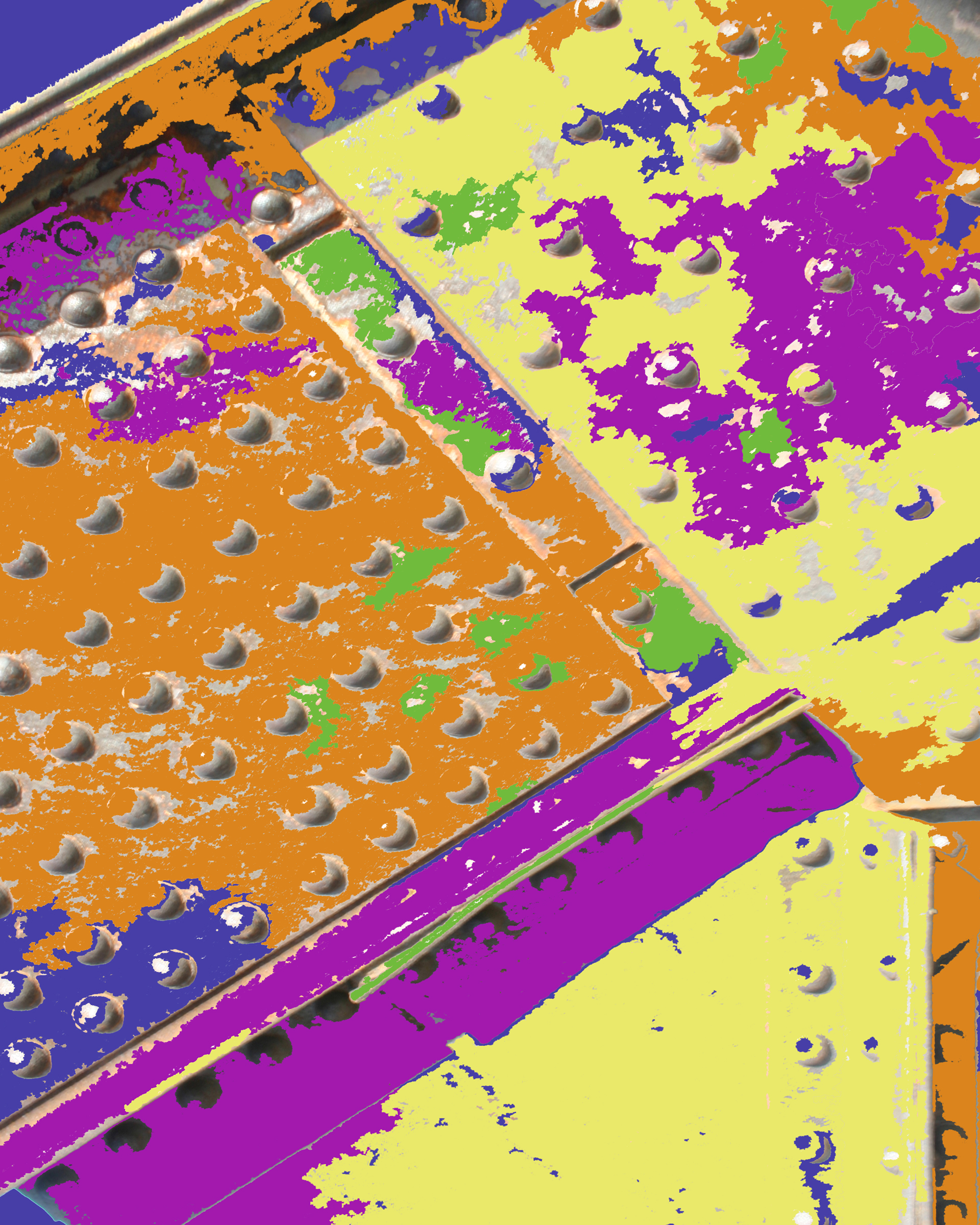
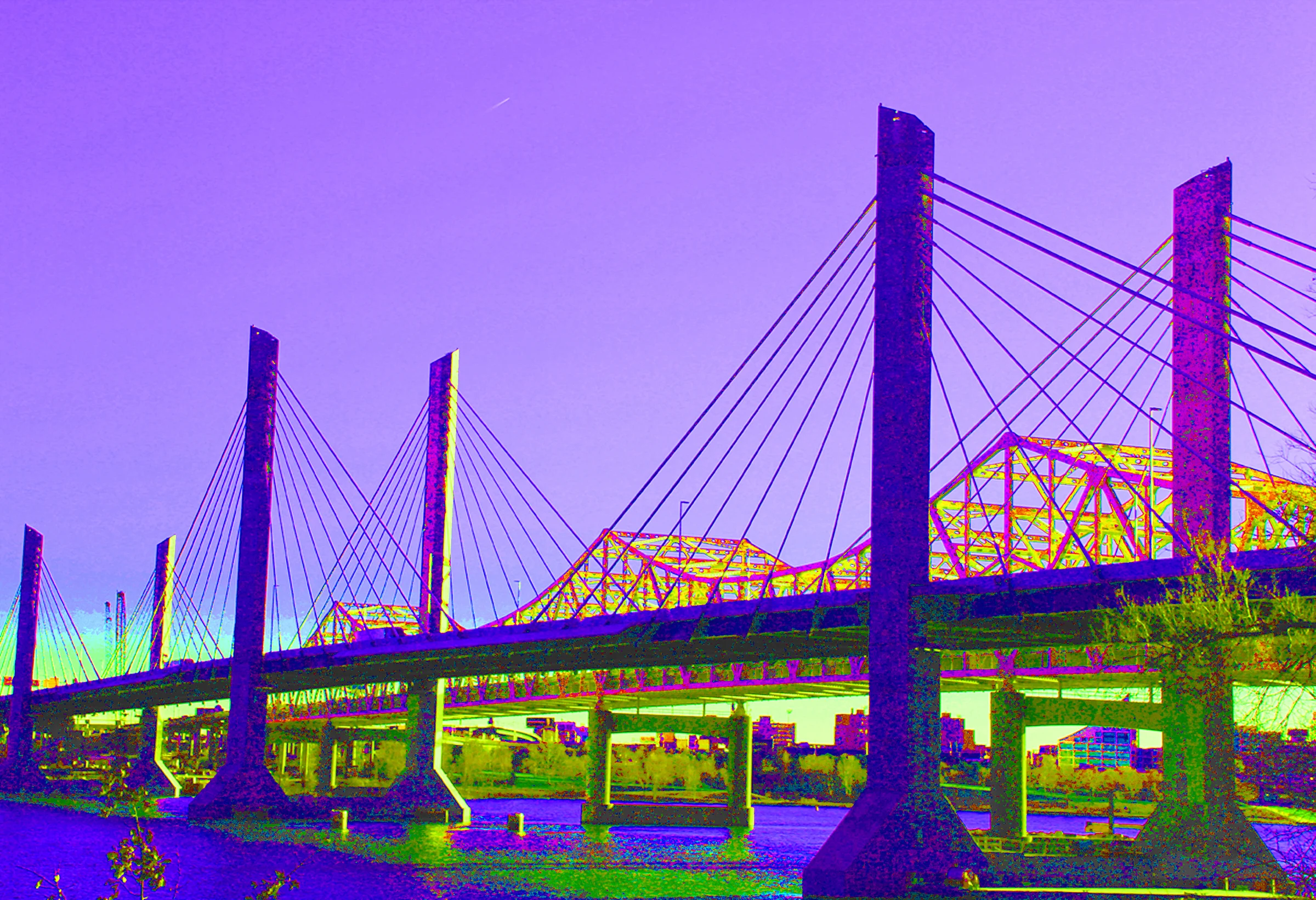
In the work of Patricia Brock we see how versatile the camera can be as a creative tool. Brock shoots a broad range of images, including work of a distinctly commercial sensibility. The intimate close-ups of flora capture the grace and delicacy of nature in representational terms, yet “Bathed in Sunlight” also allows the recognizable forms of flower petals to begin a shift into abstraction. The overwhelming light of the sun subtly blinding the detail at the very moment it clarifies it.

And then the high contrast of her recent exploration of the newly opened Lincoln suspension bridge stands apart from the flowers; expansive in their composition, Brock pushes the color into extremes through digital manipulation, now emphasizing the geometric abstraction of the vertical cables through deliberate choice. The older bridge we see through those dissecting vertical elements establishing context and even further contrast.

Patricia Brock taking a photo with her camera.

Patricia Brock taking a photo with her camera.

Brock had used her mother’s box camera as a child, and returned to photography after retiring from teaching elementary school 18 years ago, embarking on a new career and opening her own photography business. She has printed on various materials such as photo paper, metallic papers, canvas and brushed aluminum recently introduced a new creative line for the home or garden with her photographs printed on brushed aluminum or acrylic, which can be used in outdoor spaces. 

Brock is a juried participant of the Kentucky Arts Council’s Kentucky Crafted Program, The Architectural Artists Directory, and a juried exhibiting member of The Louisville Artisans Guild. Her work is represented by KORE Gallery in Louisville, KY. Currently her work is on exhibit as a part of At the Rivers Bend: Our Place on the Ohio, at the Evansville Museum in Evansville, IN. It runs through November 27.

“Riveted (Big 4 Pedway Bridge)” by Patricia Brock, 16x20in, photography on brushed aluminum, $275 | BUY NOW

“Riveted (Big 4 Pedway Bridge)” by Patricia Brock, 16x20in, photography on brushed aluminum, $275 | BUY NOW

PUBLISHED WORKS
2015 BLINK, Art Design Consultants, Cincinnati, OH
2008 Kentucky Quilt Trails
2007 Saint Paul’s Art on The Parish Green, New Albany, IN, advertising material
2006 The Delta Kappa Gamma Bulletin, Vol. 72-4
2006 The Delta Kappa Gamma Bulletin, Vol. 72-3
2006 Promotional Materials, KY Crafted: The Market, KY
2004 Botanica Fleur de Lis Poster, Louisville, KY

COLLECTIONS
Owensboro Health Regional Hospital, KY
Saint Joseph Hospital, KY
Private collections, Louisville, KY
Private collections, The Villages, FL

Hometown: Louisville, Kentucky
Age: 68
Education: BS in Education, MA in Education from Eastern Kentucky University 
Gallery Representation:
KORE Gallery (Louisville)
Website: http://www.PatriciaBrockPhotography.com

“Suspension I (Lincoln Bridge)” by Patricia Brock, 36x22in, photography, triptych on acrylic, $575 | BUY NOW

“Suspension I (Lincoln Bridge)” by Patricia Brock, 36x22in, photography, triptych on acrylic, $575 | BUY NOW

“Bermuda Hibiscus” by Patricia Brock, 36x24in, photography on brushed aluminum, $454 | BUY NOW

“Bermuda Hibiscus” by Patricia Brock, 36x24in, photography on brushed aluminum, $454 | BUY NOW

“Suspension V (Lincoln Bridge)” by Patricia Brock, 16x20in, photography on archival photo paper (matted and framed), $225 | BUY NOW

“Suspension V (Lincoln Bridge)” by Patricia Brock, 16x20in, photography on archival photo paper (matted and framed), $225 | BUY NOW

Are you interested in being on Artebella? Click here to learn more.

Written by Keith Waits. Entire contents copyright © 2016 Louisville Visual Art. All rights reserved.

Interested in advertising on Artebella? Click here for more information.

Interested in advertising on Artebella? Click here for more information.

Print Making, Mixed Media

Vignette: Susan Moffett


“The rhythm of this work is integrated with the presence of music and dance in my life.”
– Susan Moffett


A photograph of Susan Moffett in her studio.

A photograph of Susan Moffett in her studio.

Music is so often, if not always, an integral part of the life of a visual artist. Besides being a highly respected printmaker and teacher, Susan Moffett is also a “Caller” for contra and square dances, and now is playing the fiddle. If we might characterize such pursuits as folk music crossed with precision of execution, it would be perhaps be a fair description of the work we see here.

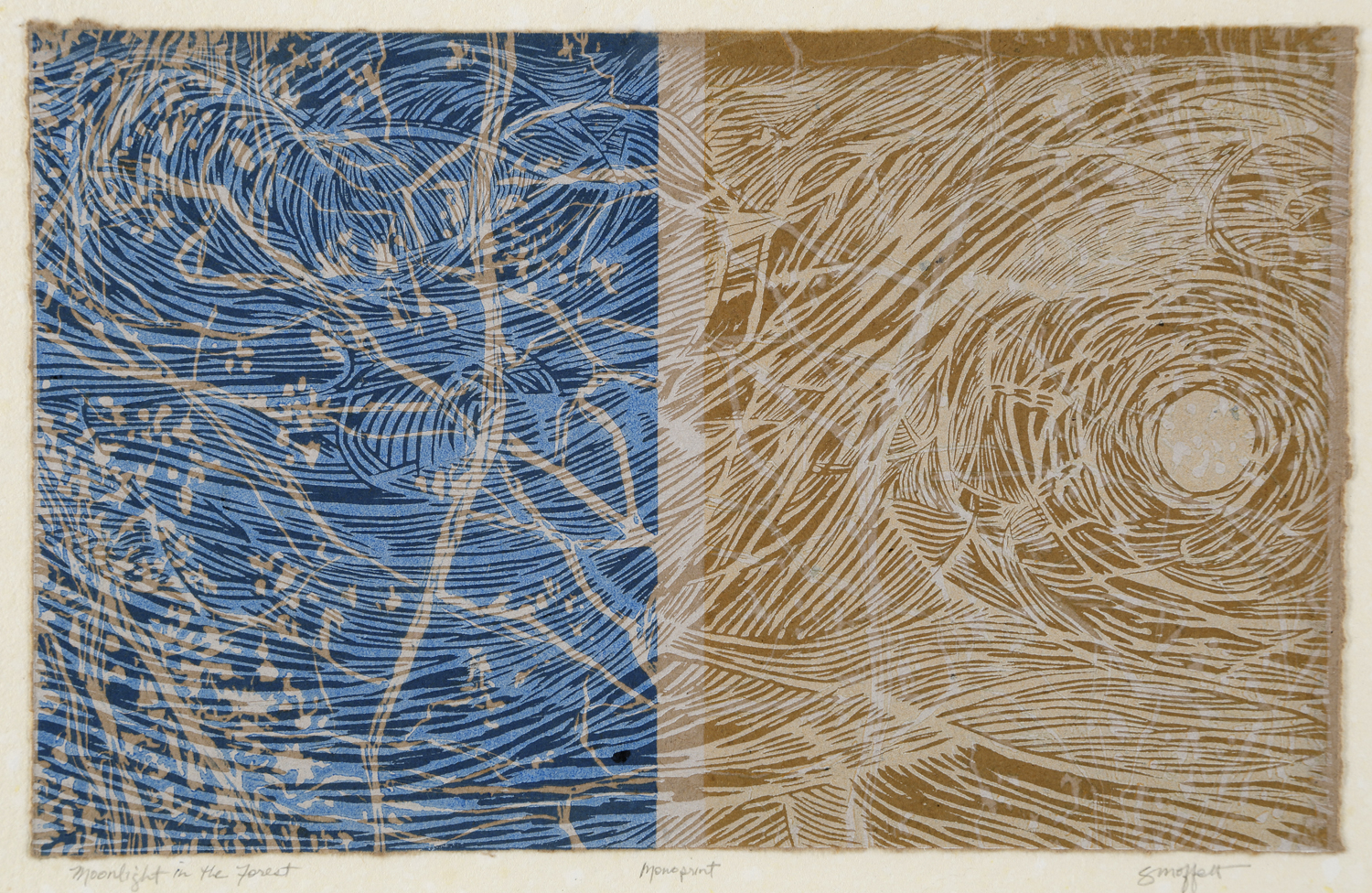
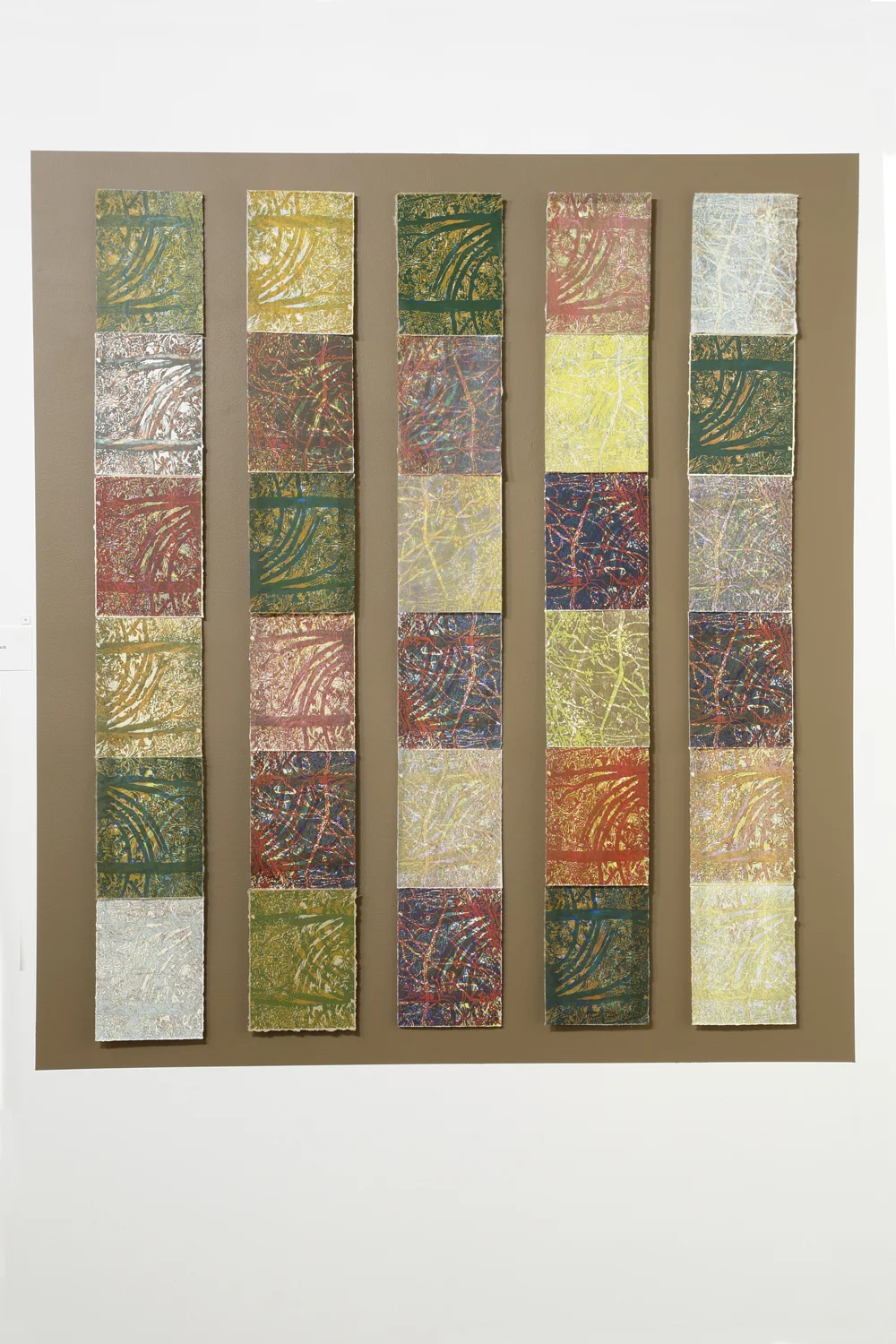
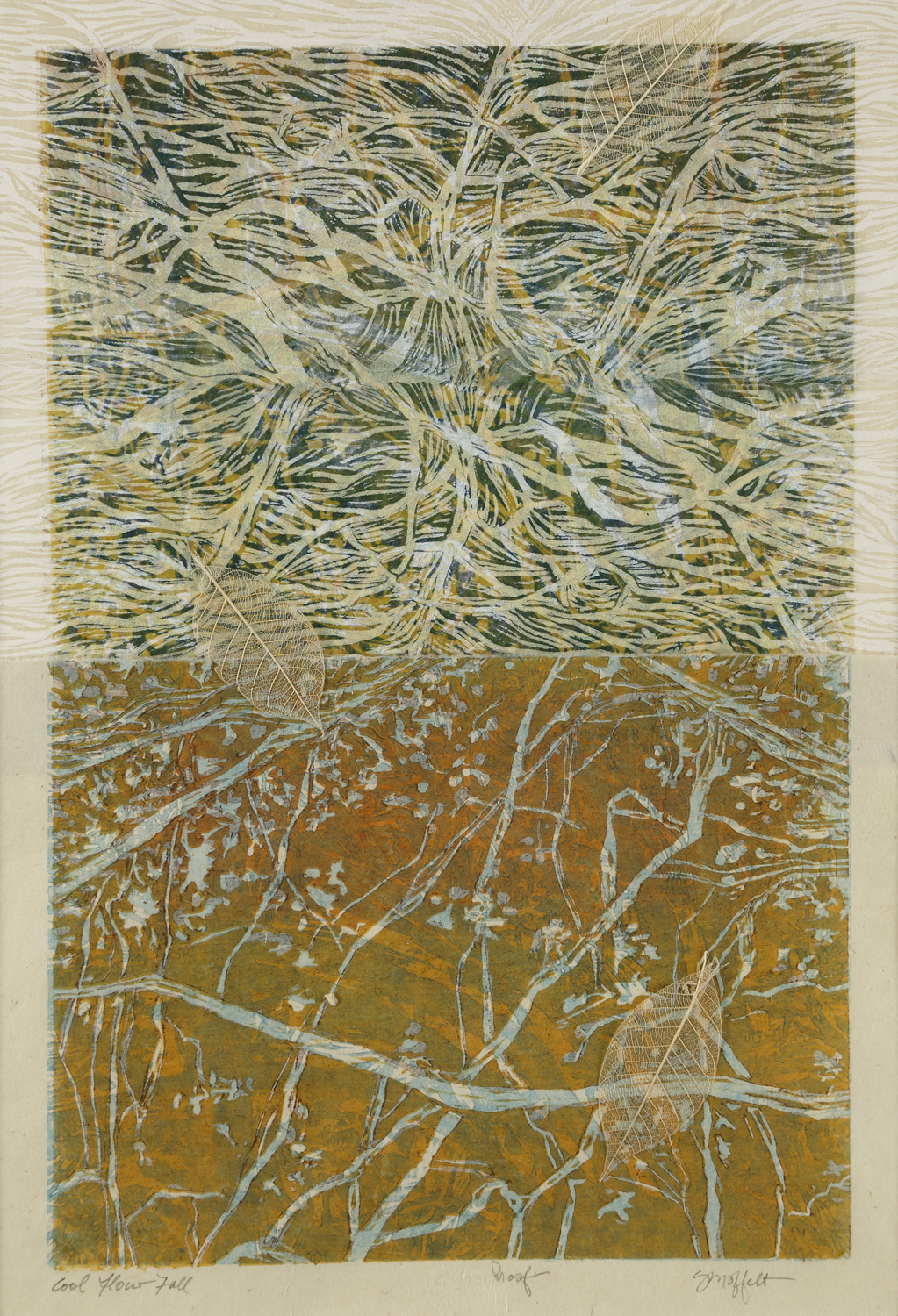
The tradition and protocol of printmaking includes labored technique, process, and the notion of limited editions of prints pulled by the artist to their exacting standards, but we find Moffett abandoning those for what she calls the, “the freedom and spontaneity of woodcut monoprints. Instead of a traditional series of perfected prints with a consistent image, I opt to use the block prints in an intuitive exploration of organic forms, creating rhythm within and relationships between the prints. Small prints are repurposed in relationships of color, density and repetition, to make a larger installation.”

Although Moffett is too educated and sophisticated in her sensibilities to be labeled a folk artist, there is an elemental quality in these latest images. Yet, because they are densely textured and highly detailed, they are also complex. We often find such tension at the heart of art that is compelling, a balance of contrasting themes and aesthetic that seems the honest, organic result of genuine discovery. 

"Moonlight in the Forest" by Susan Moffett, 19x14in, relief monoprint collage, $375 | BUY NOW

"Moonlight in the Forest" by Susan Moffett, 19x14in, relief monoprint collage, $375 | BUY NOW

Moffett is Professor Emeritus of Fine Art at Indiana University Southeast where she taught Printmaking, Drawing, and Art Appreciation for many years. She teaches private drawing and printmaking lessons. 

"Seasonal Rhythms" by Susan Moffett, 42x54in, relief Monoprint Installation, $2,250 | BUY NOW

"Seasonal Rhythms" by Susan Moffett, 42x54in, relief Monoprint Installation, $2,250 | BUY NOW

Moffett is a founding member of PYRO Gallery in Louisville, where she is currently exhibiting with Wendi Smith and Marilyn Whitesell in Ex-Faculty; New, Renewed and Repurposed through November 26, 2016. She has exhibited throughout the United States as well as abroad in Ireland, Poland and Australia. Her work is in numerous public and private collections including:

Selected Collections
• Evansville Museum of Arts and Science, Evansville, IN
• Hyatt Regency, Louisville, KY
• Brown-Forman Distillers Corp., Louisville, KY
• The Kentucky Foundation for Women, Louisville, KY
• Wyatt, Tarrant & Combs, Louisville, KY
• University of Dallas, Irving, TX
• The University of Tennessee, Knoxville, TN
• Owensboro Museum of Art, Owensboro, KY
• The University of South Florida, Tampa, FL

Hometown: Dallas, TX
Age: 66
Education: MFA, Northern Illinois University, 1977; Texas Tech University, 1973
Gallery Representation: Pyro Gallery (Louisville) Ro2 Art (Dallas)
Website: http://www.susanmoffett.com

"Seasonal Rhythms (detail)" by Susan Moffett

"Seasonal Rhythms (detail)" by Susan Moffett

"Cool Flow, Fall," by Susan Moffett, 14x20in, relief monoprint collage, NFS

"Cool Flow, Fall," by Susan Moffett, 14x20in, relief monoprint collage, NFS

Are you interested in being on Artebella? Click here to learn more.

Written by Keith Waits. Entire contents copyright © 2016 Louisville Visual Art. All rights reserved.

Interested in advertising on Artebella? Click here for more information.

Interested in advertising on Artebella? Click here for more information.