Fiber

Vignette: Vallorie Henderson


“Being part of the earth, its secrets are part of our fiber, our purpose, our memory, and our spirit.”  — Vallorie Henderson


"A Bigger Piece of the Pie" by Vallorie Henderson, 2x3ft, hand-dyed and felted Merino wool with silk organza, machine stitching, $675 | BUY NOW

"A Bigger Piece of the Pie" by Vallorie Henderson, 2x3ft, hand-dyed and felted Merino wool with silk organza, machine stitching, $675 | BUY NOW

Because they are created by human hand, we are tempted to think that textiles are less connected to nature than some other mediums. Yet the work of Vallorie Henderson captures the tones and textures of the natural world with certainty. Her Appalachian heritage has always imbued her artist’s sensibility with a feeling for the land, but isn’t there something inherent in the fibers of the material, which are born of the fluid, organic quality of biology, that carries the earth with it through any process?

“My work will always have its origins in nature, if not by the inherent qualities within wool that allow it to felt, then perhaps by the preference for a particular line or form found only in the natural world. I enjoy creating landscapes with an abstract expressionist approach, hoping to represent the essence of the chosen vista through transparent layers of silk and wool, allowing a visual blending of complex colors when the viewer’s eyes see multiple hues through other hues.”
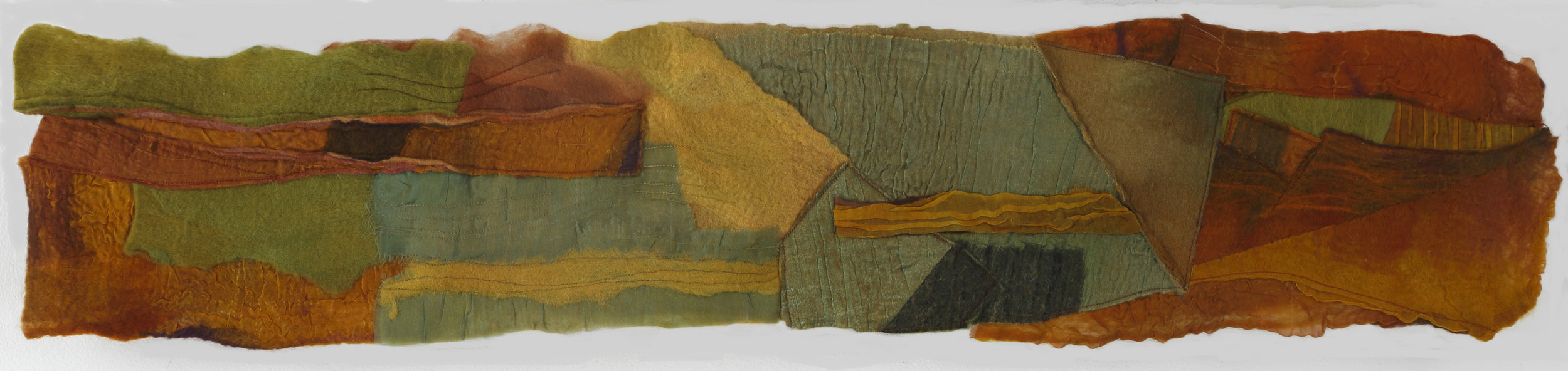
"Bottom Land" by Vallorie Henderson, 7x35in, hand-dyed and felted Merino wool with silk organza, machine stitching, $575 | BUY NOW

"Bottom Land" by Vallorie Henderson, 7x35in, hand-dyed and felted Merino wool with silk organza, machine stitching, $575 | BUY NOW

“With my most recent body of work, Birds Eye View, I chose to focus on aerial views of the farmlands in southern Indiana, western Kentucky and some areas of southern and eastern Kentucky where I am from. At first glance, these works may appear to represent a fascination with geometric shapes, patterns and repetitive grids. Viewing the landscape from higher altitudes does not allow a full understanding of the ongoing process that give form to the land below or of how its appearance reflects human occupation and the day-to-day engagements involving people, land, material, and circumstances. Beyond its dramatic scenery, our landscape is remarkable for the cultural activities and ideas it represents.”
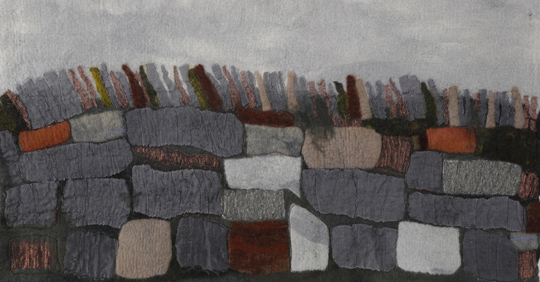
"Gray Day along the Pike" by Vallorie Henderson, 14.5x28in, hand-dyed and felted Merino wool with silk organza, machine stitching, $625 | BUY NOW

"Gray Day along the Pike" by Vallorie Henderson, 14.5x28in, hand-dyed and felted Merino wool with silk organza, machine stitching, $625 | BUY NOW

“My Cherokee ancestors did not think it possible to own land, believing instead that we are born from Mother Earth. As an artist, I accept that we are made of this earth and in some manner, have always known the earth and its environs. Being part of the earth, its secrets are part of our fiber, our purpose, our memory, and our spirit. We are this place and all of its stories and events. Making connections between our experiences, their location and time is to be part of a greater whole while living in the present.“

Vallorie Henderson’s Bird’s Eye View series is currently featured in the Louisville Visual Art exhibit, Tessile Ora, along with work by Denise Furnish and Elmer Luciell Allen. It will be on display at Louisville’s Metro Hall through May 26, 2017.

Hometown: Somerset, Kentucky
Age: 59
Education: BA in Art, Berea College, Berea, KY; MFA in Fibers, Miami University, Oxford, OH
Website: http://www.valloriehendersontextiles.com

"Amber Waves of Grain" by Vallorie Henderson, 2x3ft, hand-dyed and felted Merino wool with silk organza, machine stitching, $675 | BUY NOW
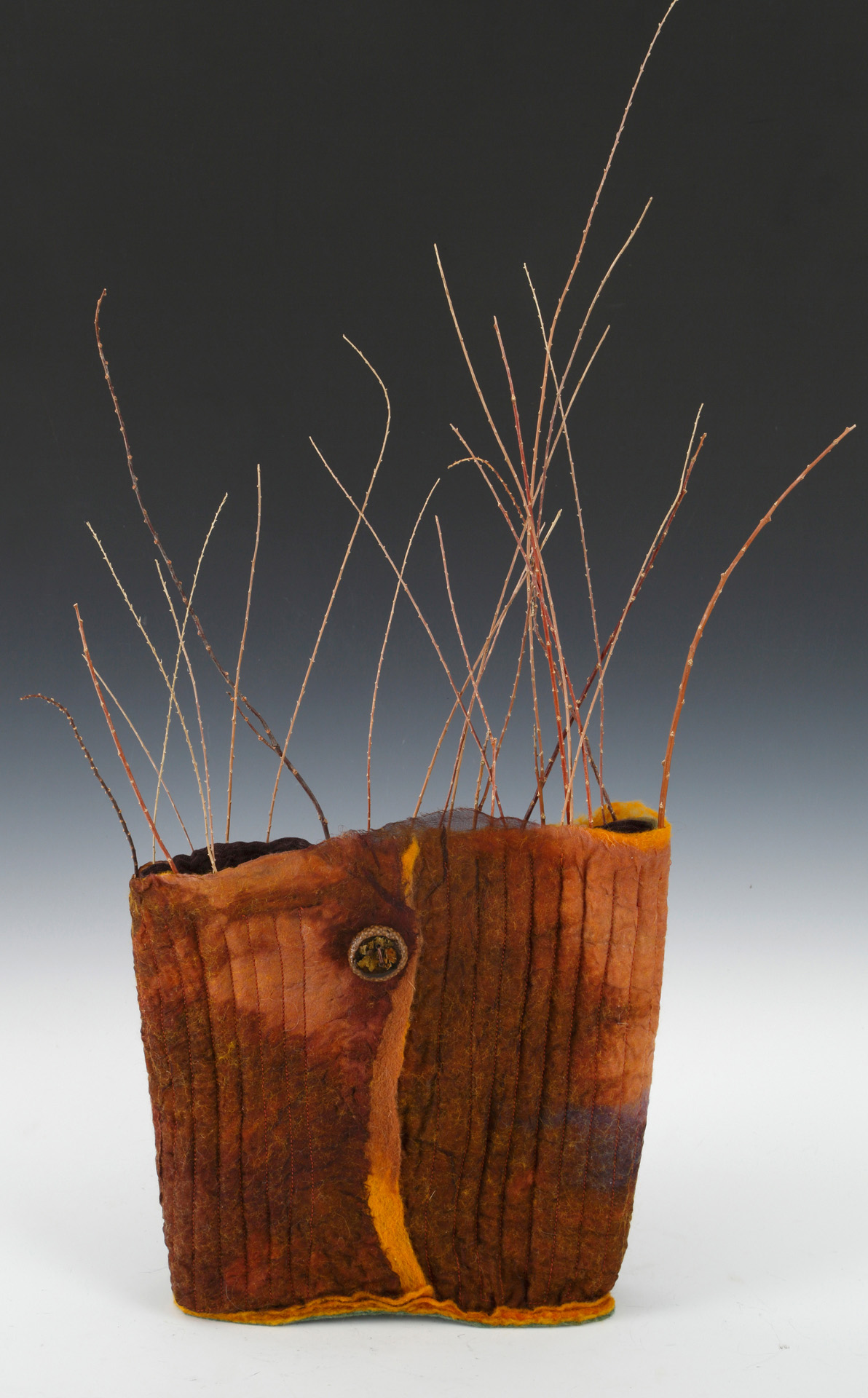
"Amber Waves of Grain" by Vallorie Henderson, 2x3ft, hand-dyed and felted Merino wool with silk organza, machine stitching, $675 | BUY NOW

"Woodland Vessel" by Vallorie Henderson

"Woodland Vessel" by Vallorie Henderson

Written by Keith Waits. Entire contents copyright © 2017 Louisville Visual Art. All rights reserved.

Are you interested in being on Artebella? Click here to learn more.

Are you interested in being on Artebella? Click here to learn more.

Ceramics

Feature: Tom Marsh Legacy


“By practicing a potentially usable art and by insisting on its usability, and the commonness and local peculiarity of his materials, he points it toward the older, finer, healthier sort of artistic success: that such excellent workmanship, such beauty and distinction, might again become ordinary.“ — Wendell Berry on Tom Marsh*


Artists, Ginny & Tom Marsh.

Artists, Ginny & Tom Marsh.

If past is indeed prologue, then perhaps we live in the present only by the leave of our ancestors; formative influences, and most especially our teachers. Tom Marsh was a teaching artist in the Greater Louisville area for more than 25 years, first at Silver Creek High School in his native Indiana during the 1960’s, and then as the founder of the Ceramics program at the University of Louisville’s Hite Institute for Art, where he taught until his death, in 1991.

It is also said, by those who loved and admired him the most, that he was demanding. Surely this is a requisite quality for any worthwhile mentor, and, from all accounts, Marsh set expectations as high for his own work as he did for anyone else, and the program he developed for U of L was unorthodox, moving beyond traditional studio parameters. Certainly experience has taught us that innovation often translates for some as ‘difficult’.

Marsh was raised by missionaries, and studied painting with Mary Spencer Nay at the University of Louisville. A missionary trip took him to Mashiko, Japan, where he ended up staying for several years, studying pottery with Sakuma Totaro (1900-1976), and learning various strands of Buddhism, most notably Rinzai. Once he returned to the U.S. he eventually resettled in Borden, Indiana, living his later years in adherence to ethical and spiritual practices born of his time in Japan, building an aesthetically spare house in the secluded woods that featured multi-functional space - the bed was raised on pulleys to make room for working.

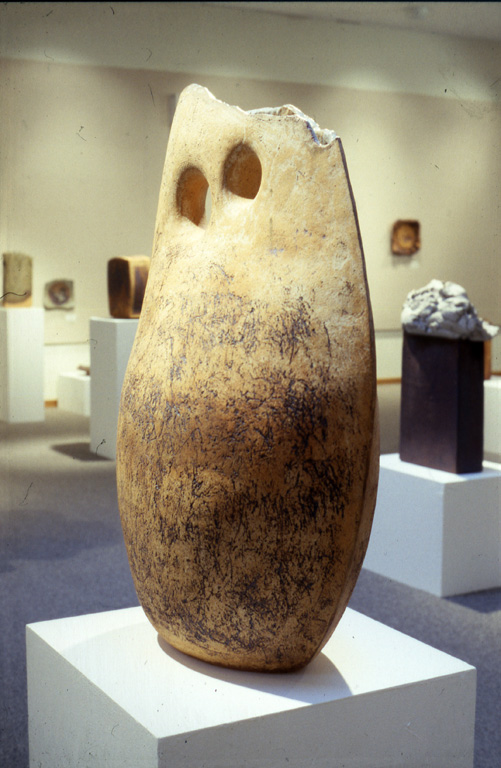
Works by Marsh Pottery, Install Image from UofL Faculty show (1984) . Photograph courtesy of the Hite Art Institute.

Works by Marsh Pottery, Install Image from UofL Faculty show (1984) . Photograph courtesy of the Hite Art Institute.

This holistic approach was indicative of what University of Louisville colleague and current faculty Jim Grubola calls the, “potter-philosopher” ideal that Marsh strived to embody. He brought it into his teaching, breaking out of the confines of the studio to instruct students in building outdoor kilns as a part of curriculum, a practice that brought many conflicts with both the Louisville Fire Department and University officials.

"Approaching" by Marsh Pottery, conjunction in situ (1992). Photograph courtesy of the Hite Art Institute.

"Approaching" by Marsh Pottery, conjunction in situ (1992). Photograph courtesy of the Hite Art Institute.

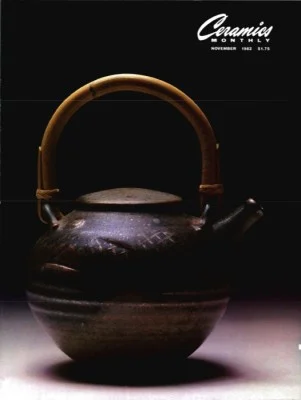
As for the work, Marsh’s ceramic pottery follows the Japanese aesthetic that finds beauty – “art,” in the strictly functional: large scale vessels for storage (because smaller pieces for daily use were commonly made from lacquer or wood), and tea pots. The full, earthen physicality might seem to contradict the western (mis) perception of delicacy as a defining characteristic of Japanese art; these are full, solid forms of visual and tactile weight. Their functionality never feels in question.

Another U of L associate, retired Print Faculty John Whitesell, describes how Marsh developed his techniques for the “expanded form jar,” in which the walls of the vessel are pushed to their limits and the outer surface begins to “crack”: “He would go beyond what you would imagine was possible… he would just keep working it, and working it.” The resulting complex, “fractured” surface texture became a trademark of Marsh’s work, a careful balance between structural integrity and creative aesthetic. However much the artist valued function, the rustic, earthy beauty of the work was always astonishing.

Whitesell also talks of “the anonymous potter,” which is a term that evolved when Marsh worked alongside his wife, Ginny Marsh. In the images of work shown here, from a 1984 sabbatical exhibit at U of L’s Schneider Galleries, all of the work is identified as simply Marsh Pottery, with no distinction given as to which Marsh created which piece. While there may be some who felt they could detect differences, Grubola, for one, could not be certain, because the nature of the vessels had gone in such an elemental direction: “Particularly towards the end,” says Grubola, “the work became more intuitive and less refined.”

"Mark" by Tom Marsh. Photo Courtesy of Hite Art Institute.

"Mark" by Tom Marsh. Photo Courtesy of Hite Art Institute.

Students came to U of L to study with Marsh specifically tolearn the Japanese-based techniques and life philosophy he expounded. Laura Ross, Wayne Ferguson, Sarah Frederick, Fong Choo, Pam Korte, Bran Hazelet, and Gwen Heffner are but a few notable potters for whom Marsh was a mentor, and many of them still live, work and teach in the area.

"Teapot" by Ginny and Tom Marsh

"Teapot" by Ginny and Tom Marsh

All of the concentration suggests that Marsh never did anything halfway. One of his teaching tools were sophisticated, multi-media presentations that he also took all around the U.S. at a time when such things were not common. “For someone so dedicated to a simple agrarian lifestyle,” remembers Whitesell, ”Tom was well-versed in technology, and had multiple projections fading in and out… synched to a pre-recorded soundtrack. It was very impressive.”

"These pots and cups and bowls are not busy calling attention to themselves as 'art objects.' Their preferred habitat is a kitchen, not a museum. They invite use. They are not just viewed. Viewing, by itself, will misunderstand them--just as, by itself, it
will misunderstand the food." — Wendell Berry

Examples of Marsh pottery are in permanent collections of museums worldwide, including the Museum of Modern Art in Kamajura, Japan.

Name: Tom Marsh (1934 -1991)
Hometown: Sellersburg, Indiana

The Marsh's 30 cubic foot cross draft salt kiln (c.1979). Photograph courtesy of the Hite Art Institute.

The Marsh's 30 cubic foot cross draft salt kiln (c.1979). Photograph courtesy of the Hite Art Institute.

"Approaching Conjunction" by Marsh Pottery, stoneware (1984). Photograph courtesy of the Hite Art Institute.

"Approaching Conjunction" by Marsh Pottery, stoneware (1984). Photograph courtesy of the Hite Art Institute.

"Vase with Brass Rings" by Marsh Pottery, 14in H, coarse stoneware (1973). Photograph courtesy of the Hite Art Institute.

"Vase with Brass Rings" by Marsh Pottery, 14in H, coarse stoneware (1973). Photograph courtesy of the Hite Art Institute.

Written by Keith Waits. Entire contents copyright © 2017 Louisville Visual Art. All rights reserved.

*From “Tom Marsh/Potter: Twenty Three Years of Clay”, published by University of Louisville, 1979.

Are you interested in being on Artebella? Click here to learn more.

Are you interested in being on Artebella? Click here to learn more.

Painting

Vignette: Michael Victor Troutman


"I didn't choose art. I was born into it." – Michael Victor Troutman


"Amber" by Michael Victor Troutman, 6x6in, acrylic on canvas (2017), $25 | BUY NOW

"Amber" by Michael Victor Troutman, 6x6in, acrylic on canvas (2017), $25 | BUY NOW

Michael Victor Troutman claims that his work contains no “pretentious message,” and that he just hopes to provoke an individual emotional response in each individual viewer. His unorthodox use of color and a deliberately unsophisticated approach to mark making give us paintings that might be more accessible to a broader audience for exactly their lack of “airs.” There is skill in the line work but a liberating lack of concern for what is academically appropriate in compositional choices.

Troutman’s work is reminiscent of mid-20th century art that included connotations from the past. “Amber” is quick and spontaneous, but cannot help but recall Andy Warhol’s portrait of Marilyn Monroe, while the sense of decadence with a hint of depravity found in “Cessation” seems to cite Toulouse-Lautrec as a part of its ancestry.

"Cessation" by Michael Victor Troutman, 24x30in, acrylic gesso varnish on canvas (2016), $123 | BUY NOW

"Cessation" by Michael Victor Troutman, 24x30in, acrylic gesso varnish on canvas (2016), $123 | BUY NOW

The artist is self-taught and has been exhibiting since the late 1990s. He primarily paints portraits but has experience with other mediums such as sculpture, found art, collages, drawings and the written word. He credits much of his artistic talent to his family, “especially, my father, Victor, & my brother, Aaron. Many other relatives—including my mother, who worked in the Culinary Arts & created edible sculptures, etc., and my sister, who worked in crafts & home décor, fabric/fashion, etc., & and uncles, grandparents, etc. who made swank furniture and kinetic art—are also influences/inspirations to my creativity.”

"A Self Portrait" by Michael Victor Troutman, 24.5 x 18.5 in, acrylic on canvas (2012) 

"A Self Portrait" by Michael Victor Troutman, 24.5 x 18.5 in, acrylic on canvas (2012) 

“I took advantage of the situation and used the tools, instruments & materials I found in my vicinity. Art is not a science, thus I did not continue formal training. Everyone is born an artist, but somewhere along the line most children morph into adults—they're too self-critical and judgmental.”

When Troutman expresses his aesthetic he tends to the poetical:

Some cold souls see art as an excessive luxury; one of them even said to me that “art is one thing that the world could do without.”
But to that bastard, I reply, I retort that never has the world done without art.
Art is ancient and as continuous as circles.
I find that when something “does not matter” is when it/something matters the most
because it's done as a thing/act in itself,
alone, clean & pure
& done because it needed or wanted to be done
& it was not done to seek rewards in heaven
& it was not done to evade punishment in hell;
it was done because it was the R—> thing to do regardless of the consequences/effects.

"TRS 3.0" by Michael victor Troutman, 20x24in, acrylic gesso varnish on canvas (2015), $138 | BUY NOW

"TRS 3.0" by Michael victor Troutman, 20x24in, acrylic gesso varnish on canvas (2015), $138 | BUY NOW

ART is about AIM:

Attention

Influence  

Manipulation

- so please let me con you. Feel! ENJOY!

Troutman’s latest exhibition started March 3 at Open Community Arts Center in Louisville.

Hometown: DePauw, Indiana
Age: 28
Education: BA, Spanish; BA, Political Science & Minor in International Studies w/ concentration in Latin America (& a brief period of graduate school MAT Spanish program)
Facebook: http://www.facebook.com/TroutmanArt

"Girl Stepping Out of Shadow" by Michael Victor Troutman, 16x20in, acrylic on canvas (2012), $169 | BUY NOW

"Girl Stepping Out of Shadow" by Michael Victor Troutman, 16x20in, acrylic on canvas (2012), $169 | BUY NOW

"Private Eye" by Michael victor Troutman, 24x30in, acrylic varnish on canvas (2015), $222 | BUY NOW

"Private Eye" by Michael victor Troutman, 24x30in, acrylic varnish on canvas (2015), $222 | BUY NOW

Written by Keith Waits. Entire contents copyright © 2017 Louisville Visual Art. All rights reserved.

Are you interested in being on Artebella? Click here to learn more.

Are you interested in being on Artebella? Click here to learn more.

Mixed Media

Q&A: Deborah Stanley


“Experience will be more valuable than anything learned in the classroom.”
— Deborah Stanley


Artist Deborah Stanley

Artist Deborah Stanley

Deborah Stanley has been a juried member of the Louisville Artisans Guild (LAG) since 2011 and a member of the Louisville Visual Art (LVA) since 2014 and have been a participatant in the Art[squared] project since its inception.  Her work has been displayed and featured in various art galleries and exhibitions in the Louisville area such as LAG 2016 Holiday Showcase and 2016 Annual Exhibit; Kaviar Forge and Gallery (Touched with Fire, 2016 and The Figure Revealed, 2014, juried participant); Gallery 104 in La Grange, KY (the 2014 Red Show, juried participant), 2013 Crafts of Kentucky Exhibition, (juried participant), JCC Patio Gallery Presents Louisville Artisans Guild, 2013, the 2012 and 2013 Brown-Foreman Annual Pride Fair, The KORE Gallery (former partner), 2012 September Art Fair Mellwood Art Center, juried participant, Louisville Artisans Guild Annual Art Exhibit, and The Women's Club of Louisville (2012 Annual No-Jury Art Show).

When did you first think you would be an artist?

2004

Who or what inspires you now?

Beautiful and colorful visual imagery in nature or photo images  

"Lukas" by Deborah Stanley, 8x10in, polymer clay (2016) $350 | BUY NOW

"Lukas" by Deborah Stanley, 8x10in, polymer clay (2016) $350 | BUY NOW

Your work is unique, and blurs many lines. How did you come to work with polymer clay?

I was working on an art project with my young son and needed something different and colorful that would be easy enough for a child to make into simple shapes. However, I found an immediate connection and affinity for the feel of the clay and the endless possibilities I saw when the colors are blended. 

You describe yourself as an “abstract expressionist,” yet the images also contain representational figures and faces – talk about how you balance the two strains in your work?

I strive to express an emotion or feeling with every piece I create. While many of my creations contain representational figures and faces, my concentration is on communicating emotion or feeling rather than trying to create a technically correct replica of a particular subject. I would say my balance of the two strains is giving just enough technical detail to capture the essence of the subject and let abstract expressionism take over from there.

"Gypsy Dancer" by Deborah Stanley, 9x12in, polymer clay (2016) $425 | BUY NOW

"Gypsy Dancer" by Deborah Stanley, 9x12in, polymer clay (2016) $425 | BUY NOW

If you could do anything else but make art, what would it be?

Photography. I have always had a passion for photography and previously owned and operated a photography business specializing in wedding and family photographs.

What frightens you the most?

Bugs!

What challenges you more than anything?

Coloring within the lines.

What is your favorite music to listen to when making art?

R&B/hip hop/rap/oldies/pop  

Vinyl or CD?

iTunes - Sorry but if I have to choose between the two, it would be CD

What advice would you give a young artist just out of college?

Experience will be more valuable than anything learned in the classroom. Keep working and never feel like you've "arrived". You will always improve if you keep working.

Tell us about an important moment of transition for you as an artist?

For my first several years as an artist, I exclusively created abstract designs, always determined to "let go/let flow" with the clay. A few years ago, I accepted a commission, which required the inclusion of a representational figure. This commission challenged me to find the most creative way to express freedom while meeting the requirement of my client. This was a pivotal moment for me and gave me the outlet to express myself or an idea or feeling in every piece I now create.

"Sheba" by Deborah Stanley, 9x12in, polymer clay (2016) $425 | BUY NOW

"Sheba" by Deborah Stanley, 9x12in, polymer clay (2016) $425 | BUY NOW

How do you feel about local art scene in Louisville? What would you change about it?

I love the art scene in Louisville. As a transplant from the Washington, DC area, I was pleasantly surprised at how art friendly Louisville is. Just walking downtown and admiring the artistic bike racks and generations of "Gallopalooza" horse statues is always entertaining. There are plenty of galleries and venues that are very welcoming for local artists of all levels. I wouldn't change a thing.

Has your style changed or evolved over the years? If so what do you think influenced this?

Yes. As I described above, my style has evolved from strictly abstract, to Abstract Expressionism utilizing representational figures or faces. It was a required element in a new commission, so I had to give it a try and have not looked back!

MV5BMzMzNzU0NzQ1NF5BMl5BanBnXkFtZTcwNTMzOTEzMQ@@._V1_SY1000_SX670_AL_.jpg

Favorite movie?

"Something New"

If you could meet any celebrity who would it be and what would you ask them?

Boy George. I would ask him where his courage comes from to have demanded to live and look his own way since childhood. His love of freedom and honest way of expressing himself has always been an inspiration to me.

Hometown: Silver Spring, Maryland
Age: 52
Education: Studied Business Administration and Sociology at Montgomery College in Rockville, MD
Website: http://www.aegalleryshop.com

"Color Chameleon" by Deborah Stanley, 9x12in, polymer clay (2016) $425 | BUY NOW

"Color Chameleon" by Deborah Stanley, 9x12in, polymer clay (2016) $425 | BUY NOW

"The People's Champ" by Deborah Stanley, 9x12in, polymer clay (2016)

"The People's Champ" by Deborah Stanley, 9x12in, polymer clay (2016)

"The Purplest" by Deborah Stanley, 11x142in, polymer clay (2016), $500 | BUY NOW

"The Purplest" by Deborah Stanley, 11x142in, polymer clay (2016), $500 | BUY NOW

Entire contents copyright © 2016 Louisville Visual Art. All rights reserved.

Are you interested in being on Artebella? Click here to learn more.

Are you interested in being on Artebella? Click here to learn more.

Photography

Vignette: Charles Mintz


“Hardware stores are about self-reliance and culture that values results rather than shiny new things. In today’s world, they are survivors.” — Charles Mintz


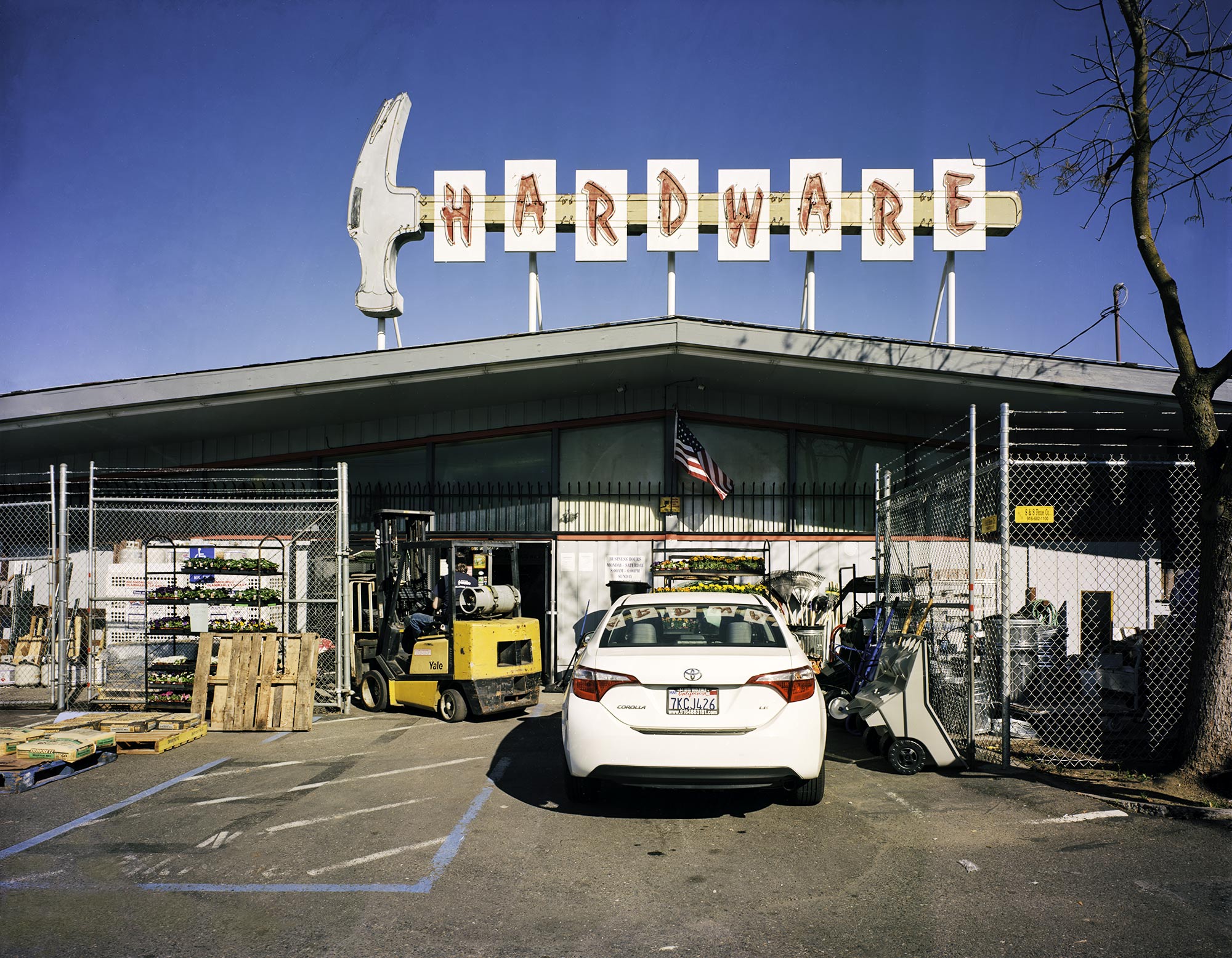
"Cedar Center Hardware" by Charles Mintz, 32 x 40in, Inkjet Print From Scanned FIlm (2015), $1000 | BUY NOW

"Cedar Center Hardware" by Charles Mintz, 32 x 40in, Inkjet Print From Scanned FIlm (2015), $1000 | BUY NOW

As we make the world shiny and new with urban renewal and fashionable shopping malls, there is still a network of old-fashioned hardware stores located in American communities. The counters are aged; once sharp corners worn to a nub, yellowed tile floors, the glare of fluorescent lights on plastic packaged merchandise filling every square inch of space, so that the color of the walls remain a mystery. Photographer Charles Mintz has been documenting these archetypal exemplars of the American character for the last few years, searching out the rustic and utilitarian businesses wherever he travels.

As is his custom, Mintz uses a large format film camera with interior exposures ranging from one to six minutes. He explains how it serves to break the ice with his subjects:  “Though ungainly, the camera is appreciated by the owners, who gave their permission for the project, and allows some control over focus and perspective. The project is a continuation of work exploring the Great American Dream and the meaning of home. Hardware stores are where we go to fix things - to make things. They are about self-reliance and culture that values results rather than shiny new things. In today’s world, they are survivors.”

"Heuser Hardware" by Charles Mintz, 32 x 40in, Inkjet Print From Scanned FIlm (2016), $1000 | BUY NOW

"Heuser Hardware" by Charles Mintz, 32 x 40in, Inkjet Print From Scanned FIlm (2016), $1000 | BUY NOW

“All of my work is about things that are important to me. It is built around my biography but is not about me. Rather it is about the culture of my time and place. It is intended to make you feel and to make you think, though it is not didactic. While this project is not traditional portraiture, it pictures the people that own, operate and shop in these stores. In addition, we can see both common elements and hints of where we are. There is a sense of belonging, a sense of place. To the extent possible, I want the subjects to speak for themselves with a minimum of my interpretation.”

Since becoming a full time photographer in 2008, Mintz has explored portraiture through objects and locations: The Album Project, Precious Objects and, still in progress, Costumes. Even Every Place – I Have Ever Lived, where people in the images are largely unrecognizable, is uniquely personal, beginning with my childhood home that was in foreclosure and continuing in all my lifetime neighborhoods the work has become less traditionally photographic both in form and method.

"Hollywood Hardware" by Charles Mintz, 32 x 40in, Inkjet Print From Scanned FIlm (2016), $1000 | BUY NOW

"Hollywood Hardware" by Charles Mintz, 32 x 40in, Inkjet Print From Scanned FIlm (2016), $1000 | BUY NOW

Mintz was Artist in Residence at the Kala Art Institute in Berkeley CA in March 2016, and he was was awarded an Ohio Arts Council Individual Excellence Award for 2015. His work can be found in museums, including the Smithsonian Museum of American History, private and corporate collections in North America, Europe and Asia.

Trillium Books, an imprint of The Ohio State University Press, published his latest book, “Lustron Stories”, in 2016. The Lustron series was exhibited at LVA’s PUBLIC Gallery in Louisville in 2015.

Hometown: Cleveland, Ohio
Age: 69
Education: Mintz studied photography at Maine Photographic Workshop, Parsons School of Design, the International Center for Photography, Lakeland Community College and Cuyahoga Community College. He has a BSEE from Purdue University and an MSEE from Cleveland State University.
Gallery Representation: 1point618 Gallery
Website: www.chuckmintz.com

"Krays Hardware" by Charles Mintz, 32 x 40in, Inkjet Print From Scanned FIlm (2015), $1000 | BUY NOW

"Krays Hardware" by Charles Mintz, 32 x 40in, Inkjet Print From Scanned FIlm (2015), $1000 | BUY NOW

"Rodeo Hardware" by Charles Mintz, 32 x 40in, Inkjet Print From Scanned FIlm (2016), $1000 | BUY NOW

"Rodeo Hardware" by Charles Mintz, 32 x 40in, Inkjet Print From Scanned FIlm (2016), $1000 | BUY NOW

"Rutledge Hardware" by Charles Mintz, 32 x 40in, Inkjet Print From Scanned FIlm (2015), $1000 | BUY NOW

"Rutledge Hardware" by Charles Mintz, 32 x 40in, Inkjet Print From Scanned FIlm (2015), $1000 | BUY NOW

Written by Keith Waits. Entire contents copyright © 2016 Louisville Visual Art. All rights reserved.

Are you interested in being on Artebella? Click here to learn more.

Are you interested in being on Artebella? Click here to learn more.